
ABOUT THIS EPISODE
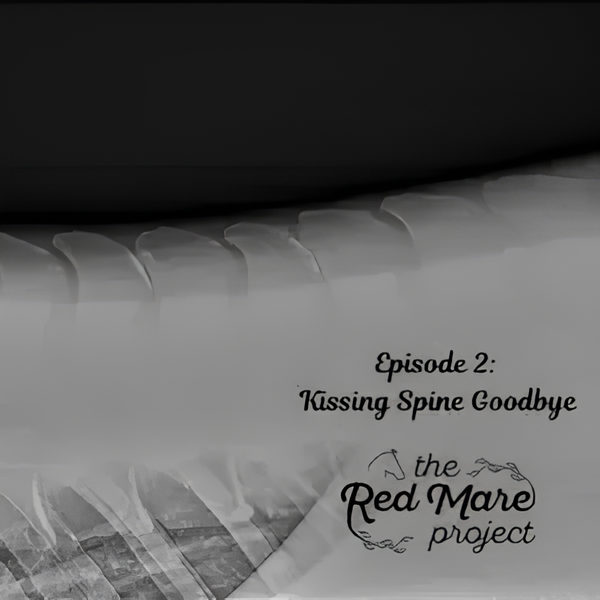
Kissing Spine can be a tough diagnosis. In this episode, Taylor share's her homebred mare's journey through the behaviors leading up to the diagnosis, the diagnostic process, and management. Taylor and Kahlan discuss management and life post-surgery, and most importantly, what could've been done different. Taylor CL Schouten, MS, APF-I Hoof Care Practicioner Wild Hoof Equine LLC www.wildhoofequine.com Kahlan Ettere Holistic Nutritionist Wise Choice Equine Wellness LLC Check out our website: www.theredmareproject.com Follow along on Facebook!
EPISODE TRANSCRIPT
— Intro: Taylor's Kissing Spine Episode Overview
Hey guys, Taylor here.
Today Kahlan and I will be discussing Kissing Spine and my marriage journey through the symptoms and behaviors leading up to her diagnosis, the diagnostic process, treatment, and rehab.
Her story is going to be a two-part series because well, she's just, she's got a lot going on.
If you and your horse are facing a diagnosis of Kissing Spine, are in the throes of rehab, or just want to learn more about Kissing Spine, grab some snacks.
This is for you.
Welcome to The Red Mare Project.
But you rode today.
How was it?
How was your ride?
She was good.
Yeah, she felt really good.
It was a little warm, a little warm first.
We had to do a lot of breaks.
Oh, okay.
Does she overheat easy?
She, well, not necessarily overheat, but it does fatigue her a little bit.
Well, she's doing hard work typically.
Yeah.
Yeah.
But, you know, she's 19 as well, even though she doesn't really, like, you would never know, but it was a little toasty for her.
Well, no, because we had a nice breeze, but I think we're actually, like, in the Thunderdome of summer.
— Catching Up: Leah's Recent Ride & Summer Heat
Yeah, it all of a sudden is way more humid, which I love.
Yeah, you're from the jungle.
I don't know that Leah loves it.
She doesn't like nature or sun or humidity.
She's a princess.
Yeah, she's from the city.
Dude, I was speaking of, like, being in the Thunderdome.
Last night, I was checking out at the grocery store, and after, like, a 12-hour day, so it looked.
You could tell.
You could tell.
In the cashier, when I was checking out, it looked at me and was like, you've been outside.
And I was just like, oh, can you, I was just being facetious.
I was like, can you see it or smell it?
And this dude said, oh, I can smell it.
I was like, I'm going to collect my things, and I'll be on my way.
Thank you very much for your time, sir.
Goodbye.
I'm going to go die now.
I promise I take baths.
I'm just a fairy.
I'm just a fairy, please.
That's so funny.
Did he seem bothered by it or was he just commenting?
It was actually really funny.
He wasn't trying to be a dick about it, but it was- He was just calling you out a little bit on your ripeness.
I'm like, okay, I'm going to go die.
Bye, I'm going to go host myself off.
That's hilarious.
But yeah, so we're in the Thunderdome, so usually for workouts and things like that, I have to be cognizant for her and do ride more in the morning and stuff like that.
But yeah, she's been going really good, which is not, I mean, I don't want to say it's new that she's going really well, but...
You're seeing the fruits of your labor.
It took, yes, and it took a long time to get there.
This is 19 years of earning.
Yeah, Taylor didn't just, this didn't just fall in her lap.
She's got a beautiful, perfect horse, but she's not for the faint of heart.
I was like, we rode at her barn a couple weeks ago, almost a month ago now.
It was so fun.
It was the most fun I've had in so long, honestly.
It was so nice to actually get to watch her after, like, we'd yap to each other every day about each other's horse.
— Watching Taylor Ride: A Beautiful Moment
It was so nice to experience that and see you have so much fun.
Like, you both looked relaxed, like you were just, like, lying around.
Dude, thank you, because it really, it has been a monster of a journey, and that's, like, what we wanted to kind of unpack a little bit today, because it hasn't always been that way.
Part one.
Part one, because this is probably a trilogy.
I foresee it being a trilogy, honestly.
She deserves it, right, Leah?
The whole thing.
Hi, baby.
They're about to feed, so you're probably going to hear some knickers and...
Some happy knickers.
Some happy screams.
Some love a happy scream.
Happy scream, yeah.
So yeah, she's 19 now, and let's time travel back.
I got really lucky with her for the first half of her life, which I feel like a lot of us do.
Yeah.
When they're young, they can get away with living off of Taco Bell and Mountain Dew, and just dicking around.
Their bodies can have these imbalances.
They don't care.
It doesn't matter.
Yeah.
Yeah.
You cut a leg off, they keep going.
It's fine.
Until it's not.
Until it's not, yeah.
So this must have been six years ago?
Oh, was it that long?
I didn't realize it was that long.
Yeah.
Yeah.
She was 14.
No, hold on.
She was 14.
She's 19 now, so five years ago.
So I'm a liar.
Yeah.
So no six years is when it really started to show up.
She just wasn't going right.
Just like ADR, if you will, just like ain't doing right kind of stuff.
Not like lame, but just not...
She wasn't thriving.
Not comfortable.
She wasn't thriving.
And her feet weren't fantastic in retrospect, but a lot of bucking.
She would buck a lot.
She was refusing a lot.
And she just wasn't good.
She wasn't good.
And in retrospect, looking back now, I mean, it was all very obvious.
Yeah.
But I didn't know.
Taylor from the future knows that's easy.
Taylor from five years ago did not.
She didn't know what to do.
She didn't.
And so we took her to, well, actually, hold on, rewind.
All the bucking, because a lot of it was behavior stuff.
And like he said, she is a bad bitch.
Don't preach her error.
But she's such a good girl.
She is.
She's a really solid citizen.
And but she just, there was a lot of behavior stuff going on.
She was girthy.
She just, she didn't like to be touched, blah, blah, blah, kind of all that stuff.
And we just always kind of chalked it up to just her being a mare.
Which, famous last words.
Right.
And but it just all kind of compounded, and it got to the point where like we couldn't compete cross-country anymore because she was refusing.
Really?
Have I told you how this mare would refuse?
No, because I just watched you literally float through a field over jumps that you hadn't jumped in years.
So it's so hard to picture.
My sister in Christ, it was zero self-preservation.
The way this mare would refuse was it was almost an art form.
So there were two occasions, and this was at a poplar when we used to go down there.
So there was one time, it was just a big log, like a fallen tree, big log.
— Early Warning Signs: Trail Ride Refusals & Dangerous Behavior
The mare jumped it, but she just put her front legs over and then stopped.
Oh, that's scary.
So she was straddling it, so my legs were just my feet were on the stirrups, of course.
Almost touching the log.
Oh, they were on the log.
Okay.
And she just stopped there.
Okay.
And she just turned around and looked at me, and I swear to God, she said, what are you going to do now?
And I said, I don't know.
I don't know, dear.
I don't know.
And we can laugh about it now.
Yeah.
It was probably heartbreaking at the time and scary.
I didn't know what to do, and she just figured it out.
She just walked backwards and drug her forelegs over it.
It was insane.
That makes sense, though.
Insane.
So that was kind of like red flag number one, like big red flag number one.
She's not one for nonsense.
That wasn't for fun.
And then the second time, and this was what like put the nail in the coffin.
There was an oxer out there, and she dumped just the first part and landed in the middle and stood there.
And I was, oh shit, oh shit.
What do we do now?
And she figured, she's, I mean, she's a cat.
She can get out.
And she did it.
I just dropped my reins.
I was like, sister, you got it from here.
You got yourself into this mess, you're gonna get yourself out.
And God bless, she did.
But that's when I was like, all right, there's something.
This isn't just for fun.
This is major.
She's not being difficult or ridiculous.
She's just, something's wrong.
This is major.
So like, what was the first step in figuring out what it was?
Well, at the time, I didn't, I mean, I had support, but I didn't have a lot of support.
And I don't think I was confident enough in my skills to really, like, grab the bull by the horns and run into diagnostics.
Sure.
We just kind of switched gears and focused more so on Dressage.
I was like, we're just going to leave jumping behind, and we're just going to focus on Dressage.
Okay, yeah.
Which is fine.
That makes sense, yeah.
Because at that point, I was like, do you know what, maybe she just doesn't like it.
Sure.
She couldn't do downbanks, physically could not do downbanks, which in retrospect checks out.
But I just lost my train of thought.
Where was I?
Oh, okay.
I was like, do you know what, we're not going to jump, we're just going to do Dressage.
She's really good at it.
And then that's when bucking came up a little bit more, flying changes were really, really hard.
She, like, head tossing was a big thing.
She only does that if there's bugs involved, do you think?
Well, now.
Now, yeah.
But, yeah, that's what we were thinking, like, maybe there's some type of, like, photic sensitivity, her trigeminal nerve could be having some stuff.
Anyway, it just kind of all compounded and built up, and it got to the point where she was so, like, body sore and uncomfortable.
I didn't ride her for, like, six months.
Wow.
Yeah, because I was like, I was like, I don't want, I don't have a lord.
I think you just need a break.
I don't know what to do.
Yeah.
So was there, with the bucking, was there something that triggered it, like a particular movement that she couldn't do that would trigger the bucking?
— Bucking Episodes: What Triggered Them?
Or just like?
That's a good question.
I honestly, I can't remember.
I would assume anytime I asked her to compress.
That makes sense.
I would assume.
Yeah.
But she did have, because she's so damn athletic.
I don't think you've ever seen it because you've only seen her, like, happy.
She made it look easy, everything we did, so I believe it.
She can kick my foot out of the strip.
Oh, okay.
That's a thing.
Loki can do that, but that's not surprising at all.
Yeah, that's her little party trick.
Yeah, which- That's fun.
Another red flag.
Yeah.
Uh-huh.
But yeah, to answer your question about if there was anything in particular.
It just became everything at that point.
Yeah.
Yeah.
If I ever asked her to compress, that really was it, I would say.
So then you realized like, something's wrong.
Six months off.
After the six months, what did you do?
Well, in the middle of it, we did have- I had a different vet out because I was just like, maybe just fresh eyes.
Let's just do fresh eyes.
And we were thinking that there was something going on with her ovaries.
Because in the past, she has had some like stuff.
Little stuff.
Yeah, some stuff.
And that was kind of a fruitless endeavor.
Yeah.
Yeah.
And then eventually, I was like, oh, well, I don't know why I didn't think about it before, but I was like, let's just take her to the teaching hospital.
Yeah.
And see what we get.
Like x-ray the whole ass horse?
Do the whole thing.
Love that.
The whole fucking thing.
And we did.
We did.
And we radiographed her feet.
We radiographed her back.
I don't think we did her neck at the time, but they did like a full, yeah, full lanyard seatbelt.
Okay.
Like the whole thing.
And what did her feet look like at the time?
Because I know like now you've obviously made that in your entire career and she's under control.
Yeah.
Yeah.
But what did her feet look like at the time?
She was thin-soled.
There was definitely some medial lateral imbalances.
Actually like some pretty profound.
Okay.
At the time, did you know what you were looking at?
Not a clue.
Okay.
Not a clue.
She was barefoot.
Yeah, but definitely some significant medial lateral imbalances.
Some major ass side bone.
Oh.
Yeah.
She's got some major side bone in there.
And she also at the time, I didn't realize it then, even though someone probably told me, but she had some wicked high-low.
Oh, interesting.
Wicked.
Yeah.
It wasn't until Casey Sexton, who I apprenticed with, but she was the one who brought it to my attention.
She was like, hey, shit's fucked.
Yes.
She's like, hey, sister.
What are you going to do about this?
This is bad.
She wrote severe high-low on the notes.
And at the time, I had no idea what it was.
Sure.
Not a clue.
But it was pretty loud, and her feet were just, they were tiny, but they were like, they were just so inflamed.
She had thin soles, wild imbalances, high-low, and that was just from the hairline down.
— Hoof Imbalances & First Clues from the Ground Up
Damn.
Yeah.
And I remember at the time when the vet was reviewing the rads, he said, just, you know, give these to your ferrier and just a few swipes of the rasp on the high foot and then, or on the high side, and that's it.
Yeah.
Which, okay.
Sure.
You're like, I don't, sure.
Write it down.
I'll pass it along.
Yeah.
Pass it along.
Yeah.
But yeah, we did, yeah, we did a flexion test.
I'm trying to think what else we did.
They were thinking for a time that it could be a suspensory thing.
Which was scary.
Of course.
That's like always the scariest.
Yeah.
Yeah, yeah, yeah.
It could be.
So they radiographed her back, and there were three or four contact points, three.
So from head to tail, they have 54 vertebrae.
All right.
And then in their back, they have their vertebrae, of course, but then from there's kind of there's bony projections that come up, and those are called the dorsal spinous proseses.
So it looks like a little sail almost, like a fin.
Yeah, that's a good way to put it.
Yeah.
So on their back, they have their vertebrae, and then from there, the bony projections that do look like like sails.
I love that.
Like a dorsal fin on a fish.
Yeah, totally.
And if those touch, it's called kissing spine.
And if they touch and knock enough, it can create inflammation in there, and then it can create bone remodeling on those dorsal spinous processes.
And that's your kissing spine.
So when you say that she had contact points, that's the amount of vertebrae that were touching.
Correct, yeah.
All right.
And how many was it?
I don't remember.
Like three to four.
And I can look back at her radiographs.
I swear I've repressed like all of this.
That's fair.
I don't blame you.
I was going to ask you if you know which ones.
Because I know it typically occurs between T13, T18, and T15, but I didn't know if that was the same.
Like that was her story or?
Probably.
Probably.
Because those are the main ones.
It's in the archives of the brain.
Yeah.
It's hiding.
It's repressed.
Yeah, I get that.
So the radiographer found those contact points and he said, we should probably nerve her back.
And then you get on and see if that's the thing.
And I did notice an improvement.
I did.
And I think an important thing to mention right now is that when all this was happening, this was days before COVID broke out.
I remember you telling me this.
Days.
And so the mare was insured at the time.
Amazing.
Which is great.
Yeah.
We love it.
But the mare was insured.
And with insurance, if you get a diagnosis, you have like, I can't remember.
I think it's like 180 days.
Oh, that's right.
I forgot.
Yeah, that's right.
If so, like if you're in a due treatment.
You have to do it within that time frame or they won't pay for it.
Exactly.
So, and the surgeons, the doctors did a fantastic job.
They were supportive.
But anyway, she got the diagnosis of kissing spine.
We nerve her back.
I got on and I thought she felt a little bit better.
It wasn't like a cure-all, but I was so desperate for an answer.
— Seeking Answers: The Diagnostic Journey Begins
I spoke with the vet who was doing it, and he said there's two treatments that you can do.
You can do a conservative approach, which can take months to years, and you can do surgery.
So the conservative approach is doing more like injections.
You can do like steroid injections, biologics, things like that.
Or you can do physical therapy, which will impact that a little bit more at the tail end of this.
Mesotherapy, which is like injections that are like just underneath the mesoderm, just like just underneath the skin for like painkillers.
I think they put like some vitamins and things like that in there.
Ask your vet.
So like little quaddles under the skin of stuff to calm down the inflammation is basically it?
Yeah, exactly.
Cool.
Yeah, yeah.
So you can do all that or surgery.
Okay.
And you chose surgery, right?
I did.
And, you know, in retrospect, it's definitely like the biggest regret of my life to have done that.
But I do have to give myself some grace on that, because it was days before COVID broke out when she was diagnosed, and pretty much she got this diagnosis.
The vet said, you can do the surgery.
And this was wild.
He's like, she's here now.
You can just leave her, and we can do the surgery tomorrow.
And I was like, okay.
Can I have a minute to think about it, please?
My brother in Christ.
Half-alt.
Slow down.
Let me take her home.
Let me think this over.
So there's a couple different types of surgery that you can do.
You can do the leg snip, which is there's a ligament that runs through where the dorsal spinous processes are, and it...
The theory is if you cut the ligament, it's like cutting a strand of pearls where it just like loosens them.
Yeah, that feels like the scariest option to me, actually.
Because like with bone, when bones healed, it's healed.
With tendons and ligaments and others, like all soft tissue, it's never quite the same.
Yeah.
Yeah.
So that was one option.
The other one is a bone shave where they actually have to do the ligament snip.
Like if you do the bone shave, you end up doing the ligament snip by default.
To get to the bone?
Yeah.
Yeah.
And then there's also, they can actually do like a full resection where they take out portions of the affected spinous proseses.
So they can shave it a little bit or they just cut the whole thing out or they cut the ligament.
So like they cut the whole like dorsal part?
Yeah.
And so there's no chance it can touch?
Correct.
Versus just the bony change that's causing the contact?
Ask that again?
So like...
I don't know how to ask it.
So like there's one option where they just...
Cut the whole thing out.
So they have no sale?
They have no dorsal part?
No, just gone.
Okay.
That's resection.
And then they have a bone shave where like where they do touch, they just like thin it a little bit.
They just fillet it down.
So they're not kissing anymore?
Exactly.
The surgeon said we can go ahead and do bone resection and the way that it was pitched.
And again, this was this was really fresh.
— The Surgery Decision: A Brand New Procedure
This was actually a relatively new surgery at the time.
Oh, okay.
Because this was, let me think what year this was. 2020?
Yeah.
It was 2020.
Wow.
Oh, my God.
That's why I asked earlier.
I thought, so we were talking about timeframe.
Yeah.
And I thought I remembered you saying something about COVID and like the pressure that was on you at the time.
Yeah.
So March, April of 2020.
Yeah.
Exactly.
Yeah.
She was diagnosed in February, surgery, and March.
Got it.
Oh, yeah.
Holy shit.
That's crazy.
Yeah.
It was fast.
So COVID broke out, and the surgeon called me and said, listen, you can do the surgery.
If you're going to do it, this is the perfect time.
You're in the window of insurance.
The world is shutting down.
You can't do anything with this horse anyway.
If you're going to rehab, this is the time to rehab.
I mean, good point.
He made really great points.
And then he put me in touch with a few folks who've done the surgery and have had fantastic success with it.
That was nice of him.
He was really cool.
Yeah.
Like he hugged me after every appointment.
Oh my God, I love him.
Really cool guy.
Yeah, good man.
Good man.
Awesome.
How about that guy?
Yeah.
We definitely appreciate the humanity that went into it.
Yeah.
So and then he at the end was like, or at the end of the conversation when we were trying to figure out what to do, he said, if you take them out, you never have to worry about it again.
Okay.
Which in the moment feels like a, yes, good.
I never have to think about this again.
Yes.
But now I'm like, no.
I think about it every day.
I think about it every goddamn day.
So thanks, but.
No thanks.
Didn't work out that way.
Yeah.
So, yeah, we went ahead, we did the surgery, only took out two.
Okay.
And brought her home, did the rehab.
I became a rehab freak.
And I was really concerned about whether or not to do it.
Because it was general anesthesia, they laid her down.
Scary.
Yeah, big scary.
Beforehand, I was calling my, I called my trainer who a few months prior to the diagnosis had moved out west.
Oh, I didn't know that.
Yeah, yeah, yeah.
And that was a big hit, because I feel like things might have worked out a little bit differently if she was closer, because I didn't really have, like, a go-to at the time, because I was, like, in between coaches, I didn't really have, like...
A person to lean on.
Yeah.
That so sucks.
I've been there.
That's really a hard place.
And I think, I'm hoping, you know, that's, like, the goal of this whole podcast, is for us to kind of, like, if you don't have people, like...
We'll be your people.
We're your people.
There are so many of us bitches that just really want to connect and, like, have so many stories that we can benefit from for each other.
That's kind of the whole point of this, but anyway.
Okay.
So, yeah, so she, I reached out to her, and she coached me through it.
She was really supportive.
And I reached out to my dentist at the time, or not my, Leah's dentist, not my dentist.
And at the time, it was like, hey, man, what do you think about this?
— The Best Advice She Got: Don't Do the Surgery
And she gave me some, in retrospect, the soundest advice.
And she said, Taylor, don't do the surgery.
It's going to destabilize the back because in order to get to the actual dorsal spinous processes, you have to cut through the longest and mostorous eye, which is like that big ass muscle that stabilizes the entire back.
The whole horse, yeah.
The whole thing, yeah.
Oh, wow.
And yeah, that makes sense.
Yeah, so she was like, Taylor, don't do it.
There's a guy down, there's, I know a guy.
Yeah, I got a guy.
I got a guy.
But she said there is a master trainer who is actually this untapped resource.
He's down in, not Madison, he's like in, let me, it's like southeast Georgia, Jean-Luc Corneilly.
Why do I know that name?
I've probably mentioned him before.
Let's fucking get him on.
We, oh, he's, I would love to.
He's on the list?
He's on the list.
Hell yeah.
Okay, yeah, that's awesome.
But he's, he's a master trainer, like a classic old school French master trainer.
Oh, wow.
At Georgia, that's so funny.
I know.
I know, he's here.
He's like in our backyard.
And anyway, the dentist said, you need to reach out to this guy.
His thing is a rehab, and obviously he does a bunch of like kissing spine cases, but he also does a lot of navicular rehab.
But he rehabs it through postural, it's postural changes through body movement.
Hell yeah.
Like, so.
That's awesome.
The man.
He's the guy.
He's the guy to call.
Yeah.
And my dentist at the time, she said, you need to call him.
You need to fix her feet.
That's what you need to do.
You need to fix her feet.
And that's where it all began.
That's where it started.
Even that, so she planted the seed, but it took a long time for that to become what it is today.
Yeah.
So in retrospect, I should have listened to her.
And if she's listening, shout out, shout out, you did change my life.
I just was too stupid to hear it in the moment.
No, you were scared and desperate, and you just wanted her to feel better.
I mean, stands to reason, pop them out.
They can't be a problem.
Yeah, that's true.
It stands to perfect reason.
And at this point, you didn't know, like I didn't five years ago either, the whole-horse perspective of all of this and how important...
I mean, here I am, sitting like a shrimp with a shrimp on my shirt, about to preach about posture, but...
Sorry.
Yeah, sometimes you have to sit in the rotting positions.
Yeah.
You have to.
It's okay.
Yeah.
Yeah, yeah, yeah.
So...
You ended up doing it.
We did it.
Don't dwell.
It's okay.
My insides are 20-20.
And I think the part that really ignited everything was when I finally rehabbed her back.
I did everything.
I followed it to a T.
Of course.
I was told I could get back on her after six weeks.
I did not.
Yeah.
I don't feel like that muscle is gonna...
They're cutting it.
Six weeks, dude.
Six weeks.
That's crazy.
I was like, nah, I'm gonna wait.
So I did like 12 weeks.
Good for you.
So she wore the Equiband, which was amazing.
— Equiband & Conservative Rehab Begins
We rode in it today.
Oh, really?
Okay.
I love it. 10 minutes max.
No more than that.
It's too much on them.
But I just do the bellyband.
The buttband, I think, is too much and kind of creates...
Yeah, I think it's just too much.
Almost like kyphosis kind of position.
Yeah, I don't dig it.
So we just do the bellyband.
And I walked her over ground poles.
We walked over cavated leadies.
I had her straddle poles, just a lot of stuff just to...
Classic rehab stuff.
Honestly, the pole straddle, it's so much harder than you would ever think.
Oh my God.
I challenge every single one of you, if you don't know what I'm talking about, I challenge every single one of you to go out and get your horse and get a ground pole and have them stand two legs...
How do I describe that?
Both lefts on one side and both rights on one side.
I was going to say two on each side, but that could be confused.
It's so hard.
But once I get good at it, I've seen such a big difference.
Like, if he can't do it, I know that I need to go back to whatever I was doing when he was strong.
Like, that's like a good, like, canary in the coal mine for me.
Oh, cool.
Is the pole straddle.
Because he's so close coupled in the back that if he's not strong enough to really stand under himself on either side of the pole, I know something's wrong.
Oh, that's smart.
It's always good to have, like, a metric of, like, where a horse is visibly, yeah.
Anyway, so you rehabbed.
How long, you said 12 weeks before you got on her.
I imagine it was really slow work.
Oh, yeah.
You know, she felt okay, but it was not the panacea that was promised.
And that's when I recognized that, oh, shit, this had nothing to do with her back.
Damn it.
And that's what started the complete spiral of...
Having us sit here today.
Why are we sitting here now?
Yeah.
So the part that I have to try not to get angry because everyone did their job to the best of their ability and everyone, no one did anything wrong.
Yeah.
No one did anything wrong.
But looking at Kissing Spine, upwards of 40% of horses are going to actually be radiographed with contact points.
All horses.
Yeah. 40%.
Yeah.
Going to radiograph with contact points.
But of that, only a small portion are actually symptomatic.
Well, it's like, I'm 28.
I have a little bit of knee arthritis.
Do I need a replacement?
No.
No.
Like, would that actually help if I don't fix the rest of me?
No.
Exactly.
So what's the crux of it then?
This is like the biggest.
So, like, going past the radiographs, it's really quite actually tricky because some horses will radiograph and only have a couple contact points and be crippled.
Like, their back is- Super symptomatic.
Yeah.
Their back is just a disaster.
And then I've seen some horses, I have one client who has eight contact points.
Oh my.
His spine is bananas, and his back is not an issue.
He's fine.
He's fine.
Yeah.
He's other stuff.
He actually has elbow issues.
Oh, that's rare.
That feels like, I mean, I don't see it a lot.
Yeah.
I think it's actually a little bit more common than we give it credit for.
— Kissing Spine: More Common Than We Think?
Yeah.
I guess I've never given it that much thought.
Maybe I need to.
Maybe I need to have a new fear.
It's a new fear unlocked, right?
But yeah, I've seen some that only have a couple contact points, and they're a disaster, and then some who have a bunch, and they're totally fine.
So I think the thing to really unpack or to recognize is that Kissing Spine is secondary.
Okay.
Secondary to what?
A whole bunch of stuff.
So it's almost like a game of rule-outs.
It isn't everything.
I know.
But at least in my experience, get their feet right.
Yeah.
Get their posture right, which that's a whole thing to unpack.
They need to use their body correctly.
So I think a lot of horses are going around in the world not using their core muscles like they're supposed to.
And we think they are.
Like, I think this is, before we even go any further, this is where you need to recognize that maybe your eye isn't trained the way you think it is.
Because in the past, I don't know, like, even just the past two years, my mind has been completely reshaped in how I look at horses.
Yeah.
And it's not just, are they, you know, like, head bobbing?
Is their tail to one direction?
Is, like, the little things that we all kind of know to look for in uncomfortable horses, their head to really high, are they hollow all the time?
It's not just that, like, it's everything.
I used to think my horse was, like, born over at the knee.
Guess what?
He's not at all.
Like, he's literally not.
It's because his position was wrong.
Yeah.
And if I had recognized that for what it was ten years ago, I would probably have a very different situation on my hands.
Oh, really?
I didn't realize that he was over at the knee for that appearance.
He's not anymore.
Oh, my God.
Because I got him standing up straight.
Oh, jeez.
Because, well, that's what I was always told.
Like, he's a lovely-looking horse.
Like, he's really very pretty for such a...
He's stunning.
Yeah, a backyard-bred pony.
He's not a pony.
He's regular size.
Um, but I was told by multiple of my adults growing up, like, oh, his conformation's almost perfect.
He's just a little over at the knee.
And I was like, oh, okay, cool.
So I just need to, like, support him.
I need to make sure that he's not super heavy in the front, like, training-wise.
That's how I can support him.
It's not that simple.
And now he doesn't look over in the knee at all.
No, not at all.
What I mean is it's amazing how much we can change their body with just small postural adjustments.
Yeah, yeah.
Yeah, it's posture.
It's all posture.
And proper core development and actually developing spine-stabilizing muscles.
Yeah, that's a lot easier said than done.
But you know what?
I think it is.
It is.
I just think that the resources now, especially the resources, are more abundant.
But 10 years ago, you do ground poles.
You put them in a PSOA system.
That's all I heard.
Oh my God.
I was told to put her in a PSOA for rehab, which I did not.
— What Taylor Wishes She'd Done Differently
I did not.
Listen, there's a place for everything, but that was not...
That was not it.
It's not on my referral list.
Oh, that's so kind, Taylor.
That's how I phrase things.
If I don't like something or like whatever, I'm just like, I don't have that on my referral list, but this is on my referral list.
Oh my gosh, that's so profesh.
Right?
I asked AI how to...
How do I pull up these things?
I might not sound like a bitch.
Yeah, how do I not sound like an asshole and say something?
That's it.
That's perfect.
You get it.
It's hard because it feels like this...
I don't know.
I'm trying to think of my past self, how I would have heard this.
It feels like, oh yeah, so I just do this, and then everything will be fine.
I walk them over poles, or I do a lot of trotting over poles, and I do a lot of hills, and it's fine.
It's not that simple.
And I've realized the secret sauce is really slow, quiet work.
It is slow, quiet work.
It's way harder.
I don't know.
I'm like super over thinker, very anxious person, really fast.
I do everything fast.
My horse does everything fast.
It's so hard to do slow and controlled movements, even in hand.
I'm not talking about even, like I'm just talking about in hand, rehab, little, every single interaction I have with him now, I'm thinking about where we're standing.
Like if I'm walking him and I stop, I'll make sure I square him up.
And I'll, every single time we stop, like even if I just stop to chat with a friend or like stop to grab my saddle and I'm, he's like taking my pony for a walk with me, every single time I'm interacting with him, I'm paying attention to how he's standing.
Because it'll become muscle memory and it won't have to anymore.
And I'm noticing that more like yesterday, when I, after I brought him in from a ride, I, you know, 10 years ago, if he was all splayed in different directions, when I got off of him, I'd be like, oh yeah, he's, he's just tired.
Like, he's just cocking his hip because he's tired or he's standing with this leg out front because he's tired, whatever.
Now, I would be like, oh, fuck, I fucked it up.
Like, I thought I had a good ride, maybe I didn't.
Because when we've had a good ride, he's used his body correctly, I'll come in and he naturally is standing right.
Standing square, yeah.
He's standing square and not, till like his hocks are so close together in the back, like he's standing under himself correctly.
And I'm like, oh, yes, I win.
Like, I feel like I won the fucking lottery.
I'm so glad that you mentioned that because I think a lot of people don't recognize when you do finish an exercise or a session with your horse, their muscles should be...
They got a little pump.
They should have a pump, but it should be soft.
There shouldn't be rigidity to it.
That's such a good way of explaining it.
You know, almost like water balloon-ish.
Yes, like they feel comfortable, but fit.
Like they look fit, but when you touch them, they don't feel like...
Tension, no tension.
— Muscle Development, Posture & Standing Square
Yeah, like hard.
And they should stand square.
And the reason why it's so important that...
So standing square, like an actual table, not camped under, not camped out, not splayed out.
But that is the...
That uses the least amount of energy for them to stand, and it does not require their stabilizing muscles.
Or, sorry, they only use their stabilizing muscles to stand.
There it is.
Yeah, yeah, that's...
I was like, I don't know where you're going, Vince.
But...
Because horses really, they should...
They shouldn't have a lot of muscle definition.
They should be actually like mashed potatoes.
Yeah.
Not fat.
God no, not fat.
But there shouldn't be a lot of like...
You shouldn't be able to touch them on a part of their body and feel them like holding it with tension to keep themselves from like standing weird or falling over, or like just not being comfortable.
They should be relaxed but fit.
And that's so hard.
Like, it's not hard if you're intentional.
I think the intentionality behind it is what's hard.
Because like you were saying earlier, you know, you were really lucky in the first half of her life.
And I was as well.
I could just get on my horse and he was fucking indestructible.
He could do dumb shit and bounce back.
He could eat whatever.
Like, and that's not true.
No.
And if I had known then what I know now, I probably wouldn't have had the problems I've had, but I'm almost grateful because then...
Now we know.
Yeah.
And we've learned so much.
Like, you got a career out of it.
I got a career out of it.
Like...
Yeah.
And I actually don't know a lot of alternative failures that didn't start with their own horse having an issue.
And then they got psycho-obsessive about it.
And then have shared the love with their community and have now hundreds of clients that rely on them.
Like, that's so cool.
Yeah.
I mean, our horses are our biggest teachers.
And you even said it before, if our horse gets diagnosed with something, we become psychotic about it.
Oh, my God.
And I think after, in retrospect, looking back, I don't think Leah's back was ever really an issue.
I think we treated the radiographs and not the horse.
Oh, my gosh.
Does that make sense?
Mic drop.
And I think for her, I think she just had severe high-low.
I think she had thin soles.
I think she had subclinical laminitis.
I think she had crippling ulcers.
And she probably needed some maintenance in her hocks.
And she rode in an ill-fitting saddle for a really long time that I thought was a good-fitting saddle.
Interesting.
She rode in a poor-fitting saddle for a long time, all that stuff.
And I don't think her back was an issue at all, because when I got her back after rehab and got on her after a few rides, I was like, this is the same horse.
Nothing's different.
She wasn't explosive though, right?
Was she still refusing and bucking?
She was bucking.
Yeah, bucking was going.
Really?
Oh my god.
Yeah, the bucking never stopped.
That's so disappointing.
I can't imagine how you must have felt.
— Emotional Weight of the Journey (Part Two Teased)
Well, that's why there's going to be a part two to this.
Right.
Oh my god.
I'm totally even in my head discounting the other half of her story.
Yeah.
Because most of the answers actually came from what was recently discovered.
So nothing really came of the surgery.
So now I just have to keep her back as comfortable as I possibly can.
You addressed her hooves, and that led you down a different path.
Yeah.
Yeah.
Okay.
So we've talked about like, you had her, it was a problem with her feet, problem with her posture, you fixed her saddle.
Like these all feel like obvious things to us now.
As people who've been through this, I haven't been through this, but I know about it enough.
Yeah.
A little bit.
These all feel like things that could potentially be pre-treatments, like prevention methods, instead of just causes that would then lead to a problem, right?
I mean, that's, yeah, that's kind of like the point of the way that we operate now.
Yeah.
But I think it's because we've had to walk through the fire to figure out all this stuff is that prehab is like hell of a lot better than rehab.
Every damn time.
Right?
And so like, yeah, we had to fix your feet, which became my obsession, and here we are.
And I think a lot of it is more, like you said, just like prevention.
Yeah.
So this is probably going to put me in hot water, but I don't give a shit.
We start horses way too soon.
Oh, fuck yeah.
Oh, I will always talk about that.
Stop riding baby horses.
Holy shit.
God damn.
We start them way too soon and we ask way too much of them.
And but I think there's a difference in like we do need to start them.
But I think the definition of start needs to be revisited.
Oh my God.
I love how you said that.
I really do because a horse needs to have a level of fitness before you get on them.
Oh my God.
And that does not mean running them around in a circle so that they, quote, behave or understand that you're in charge or whatever the fucking bullshit is that people say.
Like that's not it.
They need to understand how to use their body before then we add a whole other living being to their back.
Horses aren't really designed, like, anatomically to carry people.
So if we're going to ask them to do it, especially young, we need to give their body a chance to get ready to do that.
And that's not just behavioral.
People think training is like, okay, so if I, you know, lunge them around enough, they'll have the cues or whatever the bullshit is.
They need to know how to use their body.
And then I would venture to guess, I mean, I've started quite a few horses, and I would love to do it again.
I haven't started a horse in years, and I would do it completely differently now.
I wrote in a clinic with the Dr.
Gert Hirschman last weekend.
Yeah, yeah, yeah.
We had to talk about that.
We need to talk about that.
Oh, my God.
That was, that changed my life.
And that was the most beneficial riding education I've ever received.
Okay, so now I'm going to be really selfish and ask you to teach me everything that you learned.
— Key Takeaways: What Taylor Learned
I will.
And do you know what the biggest takeaway was?
Well, I mean, there's so many takeaways, but friendly hands.
And I've always prided myself in having- Yeah, you have lovely.
Thank you.
Thank you.
But he taught me how to use them more effectively and it was all based on balance.
Because that was the first thing he asked when I walked into the arena.
He said, what do you want to work on today?
And I said, I want to work on balance.
And apparently that was the right answer for her.
Oh, fuck yeah.
That's awesome.
I was like, I just, I need to work on balance.
You were immediately the favorite.
He was like, you're in a 19 year old wars and that was your answer.
And I said, because I'm obsessed with it.
It's never perfect.
It will never be perfect.
The second you think it is, something's going to go wrong and then you're going to be like, oh, I went, but I'm balanced.
I know what I'm doing.
No, the more I learned, the more I realized that it was just...
Same.
We're just like rushing into it.
Yep.
But for the young ones, we'll talk about Gerd's Clinic a little bit more.
It was incredible, though, but it's...
We're starting horses too soon, and we're not teaching them how to actually carry themselves, exactly what you said.
They need to learn how to balance themselves, how to stabilize their back, and how to actually use their core.
When it comes down to it, it's all their core.
Everything.
It's like Pilates.
Yeah, literally.
Pilates will fix anything.
It's all working on stabilizer muscles, which sucks because it's so hard.
Yeah, but I mean, in the end, it saves us.
Yeah, absolutely.
Absolutely.
I mean, and that's why kind of reframing the word start, like starting a horse.
It needs to be more of an education on, okay, this is how you hold yourself, and this is how you hold yourself for longevity and for wellness.
Yeah.
Well, I think that like a lot of people end up with throwaways because they start them too early, and they expect these high level things that their bodies are not designed to do, and then they add a person to their back, and then they're like, well, you know, they're 20, they just need to go be a kid's pony now, and then they dump their horse on someone else to deal with the like evidence of their past 20 years.
It's like, we could serve our horses so much better, we would get longer time with them comfortable if we did things right from the start.
Exactly.
Which obviously like you and I are both very lucky, we've trained our own horses from scratch, scratch.
Yeah.
And that's, you know, we've both fucked up, I'm sure.
I know I have.
I have, but yeah.
As for damn sure I have, but not everybody, you know, if you're buying a horse that's seven and has already been through it, like, that's hard.
So I feel like maybe we should talk about some resources.
So you were talking about your GERD clinic, there's, I lean a lot on Jack Ballou.
I love her.
She makes everything so easy.
— Leah Today: A Changed Horse
She has such a calming, like she looks like she's having fun, but she's also really calm about it.
She's cool.
Her horses look lovely.
She has, for those who don't know, she's she's pretty prevalent in like the rehab space, I guess I could say.
But she does a little bit of everything.
She's got multiple books for rehab, exercising, correcting postural problems that cause, quote, mystery lamenesses.
I have one.
I think it's, I read this.
I mean, I literally go to this book.
It's in my tack box.
I go to it all the time.
Because it's hard to like remember what exercises you want to do and form a fitness plan for your horse, and you kind of get lost in it sometimes.
You'll do, I know for me, I'll end up doing too much.
Yeah.
And then by the time we're done, I'm like, well, I should have stopped 20 minutes ago.
I set a timer now when we ride.
That's so smart.
I set a timer.
And I set it at 10-minute increments.
Right.
So then if I need to back off, then...
No, you have a reference of where you started at.
That makes sense.
I've been doing that at least with my warm-up so that I know I'm doing a full, solid, 10-minute marching warm-up.
Like, we'll get a little bit loose, and then we'll do a full 10-minute march, just so that...
But it's hard, because I'm like, oh yeah, it's definitely been 10 minutes, and it's been like four.
I know.
That's why I have to set a timer, because otherwise...
Yeah.
So Jack Ballou is a really good resource. 101 corrective exercises for horses.
There's 101 or 100 arena exercises by Cherry Hill.
That's a good one.
Oh, yeah.
If they're done correctly, that one has a lot more trot and canter mounted exercises, so you have to make sure you're doing it right.
Like, form is everything with this.
Do you have any other resources?
Because I feel like we've really done a good job of covering this whole thing.
I would say, so Jean-Luc Corneli, science of motion.
That man knows what he's doing.
He's quite brilliant.
And again, in retrospect, I should have just sent her to him.
We were in COVID.
I should have said, you're going to go to COVID camp with him.
Just go learn how to actually hold yourself properly.
Get your saddle fit right.
Get their mouth right.
That's a huge thing.
Dentition is huge.
Get their feet right.
Get their diet right.
I think that was a big piece.
There's a book that Gerd was really leaning on, and also Gerd himself has some brilliant literature out there.
He's written a handful of books.
But the one that he refers to the most, and it's a really hard book to read, but it's worth dragging yourself through the trenches on it.
It's called Gymnasium of the Horse, and it's by Gustav Streinbeck.
Why is it hard to read?
It's really intense.
It's super heavy, and it's like reading, like, stereo instructions.
Oh, that's exciting.
Shriveling.
But it's one of those where, like, every time you read it, you get something new from it.
Right.
You said it's Gymnasium of the Horse?
Yeah, Gymnasium of the Horse.
I think I've read the first page maybe 50 times because that's how I've had it reading it.
— Radiographs Are Essential, But Not the Full Picture
But yeah, I think the biggest takeaway from my experience with this is that radiographs are essential, but you have to look at what the radiographs are connected to.
The rest of the damn horse?
The rest of the damn horse.
And take your time.
I know that you kind of had a unique situation because it was just before COVID.
Yeah.
And you had a really supportive surgeon, but sleep on it.
Yeah.
Connect with all your resources before you make such a big decision for your animal.
Because there may be an easier non-surgical way to do this.
And that's always an option at the end.
Like, you don't have to rush into anything.
I think we're so desperate to rush into making it better that we end up stepping all over ourselves.
Yeah.
So I feel like that's a good takeaway.
In the horse community, it's really easy to feel like you have to be perfect.
Yeah.
And you have to be very defensive of what you know.
And that's not the case.
No.
You just have to surround yourself with the right people.
And once you find one, I feel like they all come trickling in.
They do.
You just kind of need to find your in.
And it's like, it takes a long time to assemble a crack team.
It does.
And now I'm going to move 800 miles away from them.
It's okay.
Well, that means that you're going to have two crack teams, because you have your crack team here, and then you're going to build yours in Texas.
I love you.
You're such a positive influence on me.
And then we're slowly going to take over the world.
But it's going to be fine.
Everything's going to be great.
Yeah.
We'll find our secret weapons.
And yeah.
Well, do you feel like we've sufficiently covered everything?
I've had so much fun.
We can probably go on for...
Well, we do have a part two.
We do have a part two.
Yeah.
A part two.
God.
Because Kissing Spine was not the answer.
That was just the beginning in her long journey.
Yeah.
So...
She likes to make sure that we're well-educated is it.
— Closing Thoughts & What's Next
That's what she's doing.
Yeah.
She just wants to make sure that you really know what you're doing.
Jesus Christ.
Oh, my God.
I don't want to have to know all these things.
But yeah, we'll unpack the rest of it next time.
But yeah.
Stay tuned for part two, guys.
All right.
Cheers.
If you or a friend have a topic, story, or case study you want us to cover in an episode, visit our website at theredmareproject.com to leave your submission, or email us at redmareproject.gmail.com.
And if you have it, please include a cute picture of the horse we will be discussing so we can make it our Facebook page profile picture.
As a reminder for listeners, this content is for educational purposes only and is not meant to diagnose or treat.
We encourage everyone to do their own research and speak with your veterinarian and care team to make sound decisions for your horse's management.
If you like the podcast, please tell a friend, like, subscribe, and follow on all the platforms.
Peace.
NEVER MISS AN EPISODE
Listen on your favorite platform
Subscribe and listen to The Equestrian Podcast wherever you get your podcasts.
