
PODCAST EPISODE
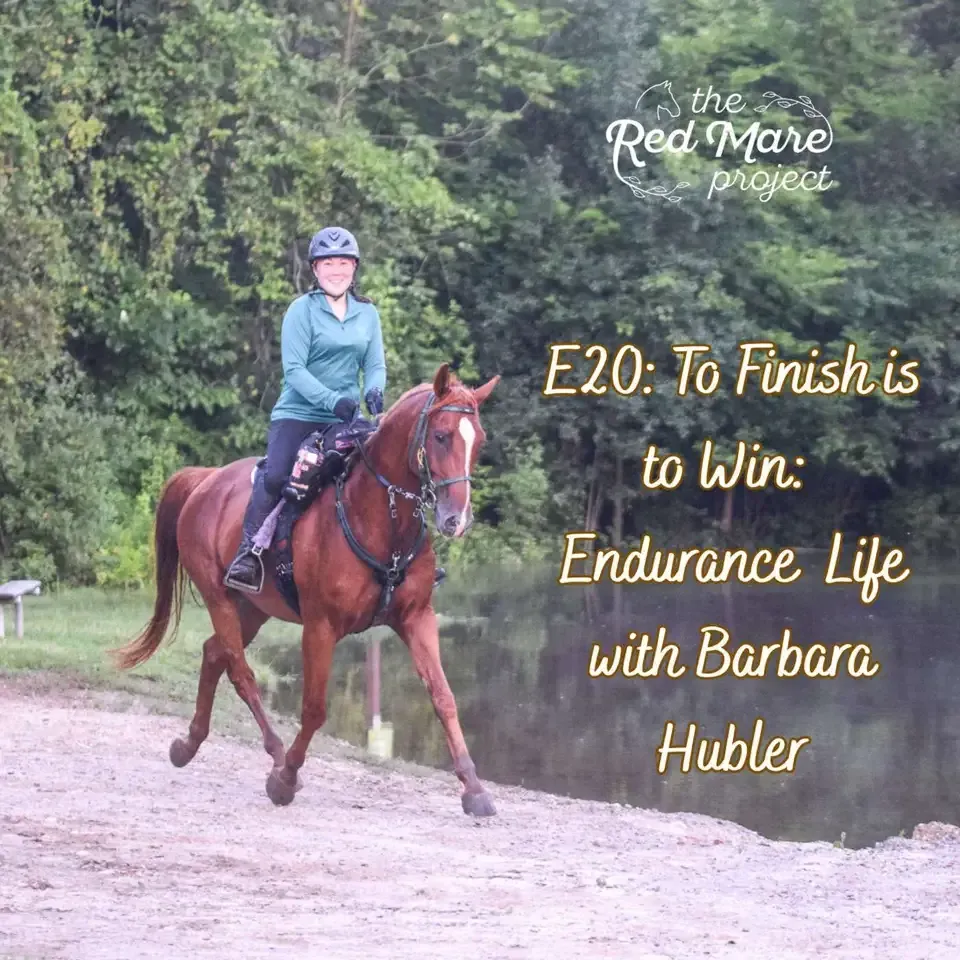
E20: To Finish is to Win: Endurance Life (Barbara Hubler)
August 5, 2026
ABOUT THIS EPISODE
Barbara Gubler discusses endurance riding, explaining its distances, AERC rules, horse selection, conditioning, nutrition, tack, hoof protection, and rigorous veterinary checks focused on horse welfare. She emphasizes that any sound, well-conditioned horse can participate, though Arabians are especially suited, and highlights the importance of rider fitness, mental readiness, pacing, and adapting to each horse. Barbara also shares a recent experience falling from and recovering her loose horse, illustrating the sport’s risks and strong community
Episode TRANSCRIPT
— Welcome: Barbara Gubler & the World of Endurance Riding
Welcome back to another episode. Today we are welcoming our friend Barbara Gubler. She's an endurance rider ready to teach us all about the sport, including training, logistics, and how to get started if you're interested. If endurance is something that piques your interest. Come join us for a fun conversation all about the intense world of long distance riding.
Welcome, Barbara and her herd of Arabians. Perfect. Great. Welcome to the Red mare project. Okay, so this is going to be a really cool chat. So, Barbara, she reached out to me. Oh, she's a better record keeper than I am, but maybe like a year and a half ago and asked me to come and work on her horses. And of course, she's like 63 miles north of me.
Like, she's God, she's way up there. And, um, but yeah, we we started working together. So she and her horses and she is one of those clients. I'm gonna brag on her. She's an A++ client. She would always have her horses complete, like, everything ready. There was a fan on me, like, she had extension cords, and she just instantly became a homie.
Oh, yeah, she's got three. Yeah, well, she. We've been through a lot. Right now she has three. Um, she moved when she reached out to me. She had moved from Indiana down to North Georgia. Mhm. And she work thing. She got baptized by fire with Georgia. Like Georgia is not an easy place to live. The weather sucks. Everything's far away from everything.
Yeah, yeah, yeah. So homegirl just I mean, she got a new mayor in the mayor's skin, just, like, fell off. Um. Oh, I forgot about the allergies. Yeah, yeah. Don't let me forget. Right. Yeah. For real? Yeah, but poor thing. She just got slammed by Georgia, and, um, you know, one of her horses got hurt and had to be euthanized.
And then another horse, um, he was a senior, so he he just, like, aged out. It was time for him to cross over, so. And pretty much Barbara and I worked together for about, like, 14 months until she moved back to Indiana. We scared her off. She was like, no, no, no, never mind. I'm going home. She's like, fuck this or this.
So and that was like one of the saddest last appointments ever because we just bonded so much. Oh, you know, and, um, anyway. But, uh, I just lost my train of thought. Um. Oh oh. During that that time that we were working together. You know, she lost two horses. She gained another one. She was trying to get these horses to survive summer.
Her her mane mount. Like her mane. Dude. Bandit. He developed a case of laminitis. Like out of the blue? Yeah, out of the blue. So just. She got slammed with every single trial and tribulation. Tribulation you could think of connected with Georgia summer. And I'd leave too. She's like, fuck this, I'm out of here. But, um, I'm gonna brag on Barbara a little bit.
She, uh, you know, during the last bit of time that she was here, she really hit the ground running with a lot of clinics and a lot of studies. She, like, we worked really closely together on her horses, health care. And now she is in charge of her horse's health care up in Indiana. Love that. And she's killing it. Amazing. She's doing so good.
So, um, and actually, she's going to be coming down here. There's a Yogi Sharp clinic at Sarah Hathaway's farm in a couple of weeks, and she's coming down for that, which is going to be oh that's fun. Yeah. That's awesome. Yes, I love that. So yeah. So Barbara was kind of my introduction into the world of endurance. And I still have so much to learn.
But it is a fascinating sport. The care that is taken for these horses. And typically, like all the endurance people that I know and just the way that the horses need to perform, they have to be managed in a species appropriate way. Mhm. Or they can't do it like they, they, they physically are not going to be able to maintain, like to hold up to that because it's grueling work.
But it's work that horses often love. Mhm. It's not boring stuff and it's not constant questions. It's like seeing the world. And I just think that's that's the only sport I've ever been interested in. I think it's so cool and I'm so excited to hear her experience with it.
And also like I know that logistics like tack and nutrition and what you're doing on the go is a huge thing that there's not a lot of regulations about. It's really what is most comfortable. Like what is what is best for your team. And I'm really excited to hear how she came to her outfit. Her nutrition, like all of that cool stuff because it's a big deal.
I mean, yeah, this is a hundred miles. That's a lot of miles. Yeah. And that was yesterday, which is. Yeah. I didn't know that. That's so cool. I know we planned this. Well, apparently. Yeah, we didn't mean to, but we're good planners. But yeah, the it never really dawned on me until a couple weeks ago.
Yeah, maybe a couple of months ago, I don't know, a little bit ago, I was a vet scribe at a local endurance ride. Oh, I forgot, right. I totally forgot you did that. Yeah, it was so cool. It was a really neat experience, and it didn't dawn on me until like 20 minutes into it, which I guess isn't that long of a time.
But, you know, my husband used to run ultras and it didn't dawn on me til I was there like, motherfucker, these are ultras. Same thing. It's the same shit. Like bringing a horse. It's just bringing a horse along. And I gained a lot. I mean, I always respected the sport, but since I had something to equate it to. Yeah. Like, goddamn. It's not just.
I mean, the horses are obviously going, but you have to think the riders are up there. For what? 12, 15 hours. Oh, yeah. You can't just be a weekend warrior and survive an endurance ride. You will. You won't survive. That's bananas. Yeah, I I'm mad respect for this because this stuff is, you know, I'm like 45 minutes in the saddle and I'm like, oh, we're done.
Thank you so much. Maybe it's hurting and then thank you. I have so many questions about that. I have so many questions. Oh, Herbert. I mean, but yeah, because I mean, after a ride, like, I mean, if I go for more than, like, you know, an hour, it's easy for me to get, like, you know, saddle sores and stuff like that. Really?
Not on my ass, but like, on my knees and just, like, just existing, you know? Oh, I've never had that. And the longest you are. But you're so badass. I the longest I've ever ridden was probably. Nine hours. Whoa! Nine or. Nine and change. And I. Impressive. You've seen what I wear when I ride. I'm wearing, like, bike shorts and vans.
And somehow I escape saddle sores every time. I've never had a saddle for my life. Are you serious? And neither has my horse. Like he's never had girth. He's not. I don't know. I don't know. I don't know. I'll just build a different home. I don't want to lie. I don't know. Because, like, you look at me wrong and I get a bruise.
But if you're, you know, on a horse, it doesn't matter. I really like nuts. Yeah. Weird. Wow. Maybe I am a bitch. Okay. Oh. No, you're just a horse ballerina. It's a different. It's a totally different thing. That's very petite. Uh, just just little things. All right. So I think, um, I think she's just about here. Yeah, I think we're ready.
— Meet Barbara: Her Horses & Journey into the Sport
I'm excited. Yeah. Yeah, yeah. All right. Hey. Hello. Hello. Oh, it's so good to see you. Hello? Can you guys hear me? Okay. Yeah, yeah. Such a treat. How's it going, girl? Good. It's good. Been busy summer, but. Yeah. How are you feeling? I know. Well, like, get into the whole ankle thing, but are you. How's your ankle? Good. Yeah. Yeah. Good.
I'm good. Um, yeah, it's. It's just been a busy summer getting my horses moved and then taking over all their health care, and, you know, all all the all the stuff, but. Yeah, well, we're really excited to talk about this. Um, endurance is the only sport that I've ever liked. And we didn't realize the Tevis was just yesterday.
Yes, I know this morning because, you know, I was watching the live stream all day yesterday, and. Yeah. So that's awesome. So you want to start a little bit, tell us a little bit about yourself and how you how you got into horses. Yeah, yeah. Um, so my name is Barbara Kubler. I'm assuming you already kind of did the introduction a little bit.
Yeah, a little bit. Now that you know how to say your name this whole time, Barbara. This whole time, that's okay, that's okay. It's confusing. I get I get it both ways a lot. So it's okay. It's very good. Yeah. Keep going, keep going. Um, yeah. So how how did I get into horses? Um, I was, I think about six. I honestly don't remember all of it.
Like, so I didn't grow up in a family with horses, you know, this was, like, totally out of the blue. But I had a friend who, um, was taking writing lessons, and I guess one day I was hanging out with them, and I was, you know, I went along to watch. And after that, I told my parents I wanted to take riding lessons, too.
And, you know, they indulged it, thinking it was one of those, you know, kind of passing, like, as kids, just try everything. Yeah. It was not a face. So I think my parents regretted that, um, pretty much instantly. So I started taking riding lessons when I was, I don't know, 6 or 7. Um, and then it's, it's.
Didn't you know all this is going from the heart of my age since then? Yeah, yeah. It's, um. So. Yeah, it, uh. I greatly appreciate my parents support. You know, my mom, she's so allergic to barn dust and cats and horses and my funeral. I just remember her sitting there in the in the viewing room, like, with her tissues and sneezing, waiting for me to take, you know, finish my lessons and, um.
Yeah. So. And then I got my first horse when I was 12. Um, she was a Chincoteague pony. So I don't know if you guys have read the Misty of Chincoteague, but. Oh, cool. Yeah, yeah, yeah. And so full circle, because we were on Chincoteague Island last week, they did the annual pony petting and the pony swim and stuff.
So that was, you know, my parents wanted to do a vacation with my husband and I, and we went and camped there for the week to watch the pony swim and all of that. I did not bring a pony home this year. I, uh um, yeah, I really wanted one, but yeah, that's, um. So I mean, again, my parents, my family were not horse people.
So, you know, I ended up bringing home when I was 12, like a four month old foal from a feral foal from the auction. Right. And you know, girl, probably not a good choice for a first horse for a 12 year old girl, but I've done it. Yeah, I spent my whole money on her and my birthday and Christmas money and and. Yeah. So it was.
And then my, you know, my parents, I mean, they, they had given me permission to bid on her in the auction. Right. But then when we won one, they were like, what? What do we do with her now? How do we get it home from Virginia to Ohio? You know, I'm from Ohio, so they're like, how do we get it home? What? Where do we put it? So that's where, you know.
Yeah, yeah. But I have a lot of a lot of good, you know, horse mentors and people along the way who knew what they were doing. And, and, you know, really helped me kind of get her, get the horse going and, you know, got her going under saddle when she was like 3 or 4 or something. And, you know, it was it was a really good experience.
It turned out really, really beautifully. You know, just kind of it, it could have turned really badly. But yeah, it's amazing that you're alive. Was this pretty mare, is this the grammar that you were telling me about? No, I never know. I never had a gray mare. Um, no. She's a chestnut pony. I don't I had her, so I had her all the way until I went to college.
And then because I couldn't keep her in in college, just time and money and all of that, I donated her to a therapeutic riding program. So she, um, was there for the remainder of her life. Um, and then I got in touch with them after I had graduated college thinking, you know, like, if she needed a retirement home, I could bring her back at some point.
Um, but she had college really badly, and and they ended up having to put her down. Um, so. Yeah, I know, um, but but. Yeah. So. Yeah. Okay. Wow. So crazy. Yeah. I had no idea about that part. That's. Look. So how did you get into endurance? How'd you find endurance? Yeah. So after college, um, when I started a real job and had some disposable income and everything.
Um, I got another horse. Um, and I was boarding him at the time. Um. Taylor, you met him? Gabe. Um. So. Yeah. Yeah. Little Arab. Um, I got him off of Facebook. It was. And now, knowing what I know, I probably wouldn't. I to each their own, right. But he was one of those that people were, you know, supposedly in the slaughter pipeline and a kill pen horse.
And then people had raised money for them, got a home. And, you know, it was kind of one of those split second decisions like, oh, he's paid for. He's free because somebody already paid his, you know, quote, bail. And, um, he was in Pennsylvania and I was in Indiana, and I was like, yeah, sure. Why not?
You know, I've been wanting a horse and he's an Arab and he's cute and he, you know. Anyway, knowing what I know now, I, I there's no such thing as a free horse because, um. I sent him to, like, a quarantine barn in Pennsylvania before I could bring him home. So he, you know, he could do all the the quarantine stuff. Um, he had strangles.
So it took, like, three months for him to recover and heal him, you know, get cleared and all of that. And I was paying board through the nose for this. Yeah. You know, quarantine. Quarantine board. Yeah. And working with a vet that I had never met just over the phone. And, you know, they were anyway, it was.
And then we had to drive out there to haul him home and everything. And it was, you know, they did no such thing as a free horse, but, um. Yeah. No, he turned out to be a good boy. Um, so I had. I got him, um, brought him to a boarding facility locally and just started trail riding with him, and it was, um, you know, because I, I didn't grow up showing I didn't do, you know, any specific kind of discipline?
— Finding Endurance: Trail Riding & Getting Started
I just enjoyed being around the horses and writing and taking lessons and stuff. So. And because, you know, my family is not like a horse family. We didn't really know how to get into the show world. And I didn't have a desire to to start showing or doing any of that. So, um, as an adult, then I was like, well, you know, I'm just going to start trail riding and, and my, my best friend, um, she also had a horse.
And so we'd haul out together to the local trails and, and start. Right, you know, go riding and stuff together. And I think she had seen an article in, like, a magazine, I don't know, Horse Illustrated or something about endurance. And um, so we read it and we were like, oh, this, this sounds cool.
So we found a local ride, um, near us and went and volunteered a couple of times and then started participating and, and that was that was it. So. Yeah. That's awesome. Huh? Yeah. I found my sport. I found my people. So how long have you been riding endurance? Um. So if you look. So, I guess as we get into some of the endurance conversation stuff.
Um, I will preface this with, um, I know enough to be dangerous, but. So I've done this for a few years, but, um, I would say to anybody who's listening, just make sure that you, you know, as as you're listening, I don't know everything. Right? Do your own research. You know, talk to talk to people.
Like, I, I'm happy to share my experiences and what it's been like for me and what I know. But I'm there are writers out there with, you know, tens of thousands of endurance miles, you know, competition miles. And, um, you know, so there are tons of people out there that no way more and have been in the sport for decades.
And, and, you know, those are the people that I look up to and that I reach out to for, for support and questions and stuff. So I'm thrilled to be on the podcast. But I just want to, you know, preface this with, you know, I'm certainly not the be all, end all. And I've got about 15. No, I just checked the other day.
I have 1500 endurance miles, so competition miles, um, more obviously through the, the conditioning and the time put into it. But I think I did my first official endurance ride in 2020. So this is my sixth season. Um, I started getting involved in the sport. I think it was like 2018 or 2017 time frame, um, volunteering.
And I did some of the intro rides, which are the shorter distances that aren't like formally recorded through um, RC, which is the the sanctioning organization, American Endurance Ride Conference. Um, so, so I've been around a few years. I know a few things. Um, I do help manage a couple of rides. Um, that my ride actually is, is in October.
Um, coming up that I'm also getting ready for and ordering warlords and making plans and stuff for that one in October. But anyway, it's. I always tell people who ask me for advice, I know enough to be dangerous, but you know. Go, go go do your own research too. We're student just like everybody else. Yeah, yeah, yeah.
— Endurance Rules, Distances & Ride Formats
Okay, well, you just answered one of my the questions I was going to ask what the overseeing entity was, but maybe you can tell us a little bit about the format of the races, like the distances if there's what like levels. Um, what you guys do if there's like a weather issue, I have some more questions connected to it.
But maybe let's start a little bit more on the formality of like distances and then like levels, if that's an appropriate way to phrase that. Yeah. Yeah. Um, so the sanctioning organization in um, the US and I think Canada as well. So the US and Canada is um, arc the American Endurance Ride Conference, um, and it's ride, not race.
Um, so I'll call you go. Okay. Yes, ma'am. Um, yeah. Asks the sanctioning organization and then there are a lot of, um, smaller like local organizations and clubs as well that that have their own, um, awards and records keeping and stuff. But the national one is at URC. Um, endurance is also an FBI sport. Um, so there is an international presence.
Arc and FBI. They they they have some, you know, history and they were used to be affiliated. And I believe now they are no longer affiliated. Um, just because some of the, the rules and the processes are a little bit different if you're writing Fi endurance versus IRC endurance. Um, eight IRC has one of in my opinion, as far as I know, like the strictest drug rules of like any sport out there.
Um, super, super strict. Because the whole point is we're looking out for the welfare of the horse. Um, we want to make sure that the horses are healthy and fit to continue. And they're not just being drugged up on painkillers and steroids and stuff in order to be able to complete the ride. Um, there's no money to be won in this.
That's one of the, like, rules of HRC. You don't you can't give out cash prizes. Um, so really, people are participating in the sport for the love of the sport and for spending time with the horses and for the community and everything. Um, which is one of the things I love about it. Um, and then there are different levels.
And there's for the most part, from what I can tell, there's no like, snobbery about, oh, if you ride a shorter distance, you're not, as you know. As a real endurance rider. Right, right. Exactly. Yeah. There's there's there's not, um, you see some of that stuff online, but like, in the, you know, at the end for years and all that, but like, yeah, in the community and like the people that you interact with, there really isn't any of that.
So, um, starting from the, the longest we'll go longest to shortest there, we'll go shortest to longest. So the shortest distance is called like the intro rides or you know, so as far as like levels, intro would be kind of the first level. And those are generally 5 to 15 miles.
They're not um recorded by E or C as far as like the, you know, record keeping or anything, but they're a good way for people to kind of dip their toe in. There's no time limit. But you do go through the regular, you know, the vet checks before the ride, after the ride.
And so it's a good way to kind of dip your toe in to get a sense of what the sport is about without the pressure of any kind of a time restriction or, um, you know, having anything go down on your, your official record. And if you're like me, I it doesn't matter. It really doesn't. But, you know, I, I like to, you know, it's like your school report card.
I feel like sometimes I, I go look at and I'm like, oh man, that ride. You know, it was a, I was, you know, had a rider option. So I didn't get to finish it and, you know, it just so anyway. But I say that that's me personally. It really doesn't matter. Um, and people don't look at like, you know, don't judge you for. Oh, you didn't finish that, right?
Because it's always about the welfare of the horse. It's you know, there was a reason why you either elected not to continue or the vet said, you know, hey, you're you're done for the day because you're looking out for the long term well-being of the horse. And so, um. You know, it's it's it matters to a degree, but it also doesn't matter.
Um, that would be one thing I'd suggest to listeners, like, if you are taking advice from somebody, do go look up their ride record. Um, because, you know, you can see how many miles they have, how long they've been in the sport. You know, what rides they've done. Um, you know what their completion record looks like?
Um, I say it doesn't matter, but I don't know that I personally would take advice from somebody who has, like, a 10% completion record. You know, it's just stuff like, yeah, I like that. Is he laughing? Right? I was just like that damn barber. Okay. Yeah. Oh.
Um, so, you know, again, it's it's all just personal preference and stuff, but, um, I was the kid in school who was very worried about my grades and my report card and what got written down on my, you know, quote, official records. So, you know, that carries over the rest of my life, I guess. Sure. Um, so intro rides.
Um, five, five, ten, you know, 15 mile distant, ten, 15 mile distances usually what's, um, offered. And then from there we have a, um division or a level called limited distance or LD. So it's officially officially called limited distance. A lot of us call it the luxury distance because they are shorter distances, usually 25 to 30 miles.
I think the rulebook allows for up to 40 miles, but you don't generally see those, at least in the areas that I ride. Um, I usually only see 25 or 30 mile distances offered, um, at the LD level and um, the time limit for those. If it's a 25 mile ride, you have six hours total. Um, and that's some of that time is also taken out for like mandatory vet checks and hold times.
Um, but you generally have and there's some nuance to like when you cross the finish line and how much time you have to, you know, get your horse's heart rate down and stuff. But roughly six hours, um, if it's 30 miles, I think you're allowed a little bit more time. I think it's like seven hours and 15 minutes or something.
But anyway, the time limit, um, correlates with the distance. And so 25 miles, six hours to complete. Um. And so usually you start early morning and then you're done by lunchtime. And so while everybody else is still out on the trail, you're back in camp enjoying your lunch, taking care of your horse, hanging out.
So that's why we call it the luxury distance, because it's it's pretty nice. You have the option. Enjoyable. Yeah. It is. So, uh, so I'm assuming the distance, like 5 to 15 or the 25 to 30. I'm assuming that's kind of dependent on the trail itself and what it can like, how it just like naturally loops. Is that kind of how it's set up? Yeah.
So the trails are set up, um, by the, the ride manager or, you know, sometimes the ride manager has help with somebody who's like the designated, um, you know, trail coordinator or whatever. And, and they, um, yeah, I guess I don't know if you talked about this in the, in the intro, but the way I describe when people say, oh, what is endurance?
The way I describe it is like, it's like marathons for horses on trails through, you know, like the woods and fields and stuff. Right. So, um, so yeah, the trails are set up. Generally they're loops, sometimes they're point to point rides. Um, campus in, uh, California is is a point to point ride.
Um, so you start at one point and you end, um, Tevis is 100 miles, so you end 100 miles later. Um, but generally they're loops and, and the loops are set up just based on what the trail system can accommodate. Sometimes you have to do a little bit of an out and back, or you have to do kind of like a lollipop.
You go out and, you know, make a loop at the end and then come back. Um, it really just kind of depends. Um. And the longer distances will be broken up into multiple loops. So like for an LD it's generally two loops. So you have you go out and you ride, you know, one loop, come back into base camp. You have your your whole your vet check and your hold.
And then you go out and you do another loop. Sometimes they're the same loops. Um, oftentimes ride managers try to mix it up. So you see different sections of the trail and it doesn't get, you know, too boring. And but again, you're kind of limited by the trail system and access to the land and stuff.
Um, right now the rules are that in order to be an Arc sanctioned ride, you have to offer a minimum of a 50 mile ride. So when you go from LD up to the next category would be endurance. Um, which leads are endurance? There they are. But like the way that they're technically, you know, named. Yeah. Um, endurance is 50 miles an up.
And so right now, in order to to have a ride sanctioned by Arc, you have to offer at least a 50 mile ride. Um, and then you can offer an LD. Most people do. Um, and then you can also offer intro rides, because right now the sport seems to be, um, we get a lot more participation in the intro and LD distances. Um, it's just a little bit less.
It's more palatable. Yes. Yeah. It's disappointing. Um, but. But. Yeah. In order to be sanctioned, they do offer. Uh, you do have to offer a 50 mile ride or more. So the endurance category is 50 to 100 miles. Um, and it's all in one day. So 50 miles, you're given 12 hours to complete, and that is 12 hours of riding time and hold time. So.
So you have, you know, generally two holds in a 50. Um, and they're, you know, usually 40 to 40 minutes to an hour. So if you have two holds out of your 12 hours ride time, that means you have roughly 12 hours of time on the trail, um, to finish the ride, um, a hundred mile ride. You're given 24 hours, so you're potentially literally up all night, 24 hours straight riding.
I've never done a 100 myself. I, I do aspire to do that someday. Um, but, you know, you hear all kinds of stories about people that are, you know, they're riding through the night and they start to hallucinate because they're so tired. You know, so it's a totally different beast. But, um, yeah. So usually in the endurance category, you see 50 miles, 75 miles and 100 miles.
Um, I've not done a 75 either. I, you know, the longest distance I've done is of 55 mile, um, distance. So. But I have goals in the future. Yeah. For sure. Yeah. That's so impressive. Okay. This is such a. You can totally tell I'm a sandbox princess with this. What happens if there's bad weather? Can you ride anyway? Okay. You know. Yeah.
Yeah, you're out there. So there are times when, if it's if it's a safety thing, um, you know, the the, the ride manager might make the decision to, you know, not start the ride. Um, you know, but I've been out there in thunderstorms, and you just hope you're, you know, the tree next to you is taller than than you.
— The Endurance Horse: Arabians, Conditioning & Soundness
And so if the lightning hit me, you know, um, I've been on rides, we've had trees. It was so windy. We've had tree limbs, like big tree limbs and trees coming down around us, um, on the trail. And you just keep, keep trucking us around the storm. Yeah. Yeah. Well, this is actually an excellent segue then into this next question.
So there is a certain breed that seems to kind of dominate endurance. And I'll speak out about that, of course. But what do you look for in an endurance horse and then which breed? Are we seeing as being, like, the frontrunner? Yeah. Ooh. Okay, so what do I look for? I will, I'll table that and come back to that one.
So Arabs, Arabians tend to be the worst dealer for the sport of endurance. Um, a lot of it is just because of breeding. And physiologically, um, they are a little bit. I mean, they're bred for it, right?
The the endurance and the stamina and, and it's just kind of in their bloodlines and, and, you know, going back hundreds of years that, you know, you look at where they came from and in the desert and stuff and they're kind of bred for that long, you know, distance not maybe not, you know, sprinting necessarily, but just long sustained, um, rides and, and they physiologically they from what I understand generally have their lighter muscled um than breeds like Quarter horses and warm bloods and stuff. So they are able to dissipate heat a little bit more quickly. Um, so you can get their, you know, body temperature down and their heart rate down a little bit faster. Um, and, and so generally, Arabs tend to be the most popular, but you can do endurance on any, you know, if you have a horse ride the horse you have.
Right. That that's one of the big mottos, um, of endurance that any horse can can do it. Um. Within reason. Right? Any well conditioned, you know. Yeah. Sound right. A sound, healthy horse can can do at least a 25. Um, there are different management considerations when you're talking about horses like mustangs or draught crosses or, you know, like a lot of the heavier bodied horses, you will probably have to work a lot harder to get them cooled out.
Um, but that's not a you know, that's not you can't do it. It's just. Exactly. Yeah. You just it's it's just a different strategy, um, that you need to have going into it. And those are all things that you learn as you do your conditioning miles and you, you know, practice as you're getting ready for, for rides.
And, um, you know, you kind of learn your horse and you kind of figure out, you know, what your horse, the individual needs because even Arabs, they're I have three of them and they're all my I'm currently competing two and one is she's four. So she's off at the trainer right now, um, learning some manners. And she will be a future endurance horse.
But the two that I'm competing right now, they they have different needs. Um, and they're both Arabs. Um, and and so, you know, I, I manage them a little bit differently during rides. Um. So. So yeah, generally Arabs. But I've seen I mean, I've seen Icelandic horses out there. Um, you know, I have a really one of my good friends, um, she writes the standard bred, off track standard bred.
I used to have a off track thoroughbred who I did endurance with. Uh, Taylor general on a roll. Yeah. He's such a good boy. He had passed away, unfortunately, but, um, he loved it. He he really enjoyed the sport. Um, he he was fantastic at it. I just did LDS with him because he raced for so long, and he just had, you know, some arthritis and stuff.
I think he had the heart and the drive. I could have done 50 with him, but physically I was like, I'm not gonna ask that of him. Yeah. Um, it's just too much so. So yeah, that's actually a good like segue into our next question is like, we are the stewards of our animals, right? And everything that we do needs to reflect that.
How do you know whether or not or when a horse mentally, physically and your relationship with them, how do you know when they're even a candidate for something like this? Yeah, yeah. So that kind of ties in with the question that Taylor was asking is like, what do you look for in an endurance horse? Um, and I would say everybody is looking for.
It's such an individual question, right. Because you spend so much time with these horses, I would say first and foremost, you have to enjoy the horse that you're riding, because oftentimes it's just you and the horse out there on trail. So you have to actually, you know, have a pretty good you don't I mean, you don't have to, but but it's it makes it a lot more fun if you actually enjoy spending time with, with the horse.
Um, and so a lot of it personality wise, you know, some people like a little bit hotter horse, um, the, a little bit more reactive and spooky. Some people don't want or need a horse that's that hot. Um, but, you know, there are there are trade offs, um, with a maybe acquire horse. Maybe they're not, as you know, fast or as interested in seeing what's around the next corner.
But I think a lot of it is, is personal preference. Um, now when you get up into like the upper levels and you're, you know, some of the, the real big names, um, in the RC sport that are, you know, very competitive and consistently winning and competing in a lot of the big rides like Tevis. And, um, I'm sure they have very specific things they are looking for in terms of conformation and bloodlines and um. And there are certain bloodlines. Right now. The racing bloodlines in the Arabians seem to be very popular. Um, just because they tend to be a pretty, like, sturdy, well-built, you know, horse with good conformation and a good brain.
Um, so the, the racing bloodlines right now are kind of having a moment, um, that are everybody's really, um, seems to be seeking those out. But um, again, any any horse can do it. Um, I know, you know, plenty of successful halter bred, you know, show ring Arabs that are also in the sport. It just it just depends.
But I would say first and foremost, a horse you like and get along with and want to spend time with. And then good conformation. Um, you know, that's always going to be the foundation for, you know, just long term soundness and longevity. Um, if you have a horse that's put together well and isn't going to be, you know, you're not going to be fighting your horse's own, you know, conformation to try to keep it sound.
Um, I would say would be the, my next big criteria, but, um, yeah, I'll, I'll pause there and then kind of go to the mental side of things that you're asking about. Caitlyn. But Taylor looks like maybe you have a question on your mind. Yeah. No. Keep going, keep going. Oh. You're good. Yeah. Okay. I wasn't yeah, I wasn't sure. So, um, but yeah.
— Listening to Your Horse: Temperament & Long-Term Welfare
So the question of how do you know if a horse enjoys doing it or if they like doing it? And it's funny you bring that up because I have one horse that I'm coming to. The conclusion. I don't know that he really loves this sport. It's Bandit Taylor. He so he's great at it and and bloodlines. He's he's French, so he's racing bred. He's an Arabian.
But bloodlines, you know, you would think that he's, like, perfect for the sport conformation. He's got some stuff. But like, he pretty he's pretty well built. Um, and conversationally he's he's pretty solid. But, um, you know, and he, he's a fantastic horse. He's like my super Steady Eddie. He's great. I love riding him. I love spending time with him.
But he's, um, temperament wise. If if we're talking a scale of, like, 1 to 10, um, ten being the hottest, he's maybe a four or a five. He's generally pretty, you know, low key level. Yeah. Which is fantastic. And I love him for that because he's not, you know, generally going to be the one that's, you know, going to spook and and jumping on trail.
And I say that because he did uh, a couple of weeks ago. But it's not typical. Go back to that one. Yeah. Yeah, yeah. Um, but but generally he's, he's pretty solid. He's, he's got a super good mind and he's just very he takes care of himself really well. He looks out for himself. He's not like a, you know, anxious, nervous horse generally. Um.
But he also because he takes such good care of himself and he has such a strong, like, self-preservation instinct. He's also like, you know what? I'd rather hang out here and eat and snack on the grass than on the trail. Like, why would I do this? Because, you know, camp is back that way, and you're asking me to keep going. You know, he's.
He will do it. He does it for me. And the LD distance, I think is kind of his. That's his jam. So I think I'm going to be an LD king. Um, because he likes that distance. He wants to be done by lunch, sitting on the couch, having a beer in the afternoon. And, yeah, this is a man. Um, but yeah. And I can do it like he does 50s. Physically.
He can do it. Um, just mentally, he. By the afternoon, he. I have to push him. I have to, you know, keep asking and move forward. And, you know, it's not fun to have to peddle a horse for 50 miles. So, yeah, it's not fun if you don't know that they're having fun, right? Like, right. Like we said earlier, this sport is often just you and your horse out.
Out. Right. Like, you have to be on the same page. You have to both be having fun or it's not like, why are we doing it then? Yeah, yeah, yeah. So no, I love him and he's he's fun. And we will do at least 150 a year because there, um, there's an award I'm working towards with him. It's called Decade Team. So if you.
So it's a horse and rider pair if you complete at least 150 every year for ten years. And it doesn't have to be consecutive years, but ten years total, um, then that team, the horse and rider gets awarded decade team. So bandit and I will do at least 150. I'm going to, you know. Would make him do it, but we'll do at least 150 for the next few years so we can.
I think we're in years. I think we've done 3 or 4 years. I think we're in year four. I think we've done anyway. So. Hoping hoping to get decade team with him because so ERC recognizes like acknowledges the the longevity and and you know that's that's decade team is considered one of the you know like highest individual awards that you can you know you can win because it means you have a horse that you've been able to keep sound and, and continue writing for, you know, ten, ten plus years. And there are some folks out there who have double decade teams with their horses, meaning they've been awesome. Yeah, they've done 20 years, at least 150 every year. There were we just just I mean, that's that's amazing to me. So, um. Yeah. And and there are age limits, lower age limits.
So a horse has to be at least 48 months to, um, as of the day of the ride, the horse has to be at least 48 months or four years old to ride an LD. And it has to be five years old, 60 months to start in a 50. So for the people who have a double decade team, the earliest they would have started riding that horse in 50s is at five years old, um, because of the rules of arc.
So you think about that. Horse then for a double decade team is at least competing into its mid 20s which is. Yeah cool. Yeah. Yeah that's a fit horse man. Well that's the that's the thing about endurance is like they prioritize horse health. Horse longevity. Like human horse relationship is enormously important in that.
And I know at some point I don't know if we're ready to do that. But I want to hear about the vet checks. I want to hear about those. Like, that's something that's extremely unique to endurance riding. And it's seems and I could be romanticizing it a little bit because I think it's cool. It seems as though that is really well respected.
— Veterinary Checks: Horse Welfare Comes First
Like, you hear all these, um, controversies in other sports of like, vets clearing horses that shouldn't be cleared and skirting the rules and blah, blah, blah, blah. That doesn't seem to be something I've heard about in endurance. So tell us a little bit about how the vet checks work and what the expectation is. Kind of walk us through that a little bit.
Yeah, yeah. So um, definitely the vets, there's a head vet like the control judge and, and whatever the vet says goes like that. They are the final say, if your horse is going to be pulled, then that's it. And you don't argue with them. Right. Like and so the vets are I I've not. Scene any and again.
You know, I'm sure there are exceptions, but all of the vets that I've met and I've ridden in the the Midwest, the northeast, the southeast region, I have not really made it out towards the West.
I'd love to someday, but I've ridden in, you know, several different states and different regions and, um, you know, so I've, I've met, you know, quite a few vets in our sport and, um, never seen anybody, you know, kind of trying to, to skirt the rules or give somebody a pass when they didn't, or the horse pass when they didn't deserve it.
If anything, it's the other way. And it was really strict. Yeah, yeah, yeah. So that's good. Yeah. Yeah, yeah. So the horse goes through several vet checks. Um, there's a vet check to start and the vet checks. I'll explain what they are, um, a little bit after this, but they're more or less all the same. So there's a vet check before the ride.
So you have to be given clearance to even start the ride. And then depending on the distance of the ride, there's, you know, one or more vet checks during the ride. Um, and then there's a vet check after the ride, and you don't technically complete until you might be off the trail. You might have finished the distance.
But if the vet says that your horse is not fit to continue at that last vet check you, you don't get your conclusion. Yeah, yeah. You didn't finish. Um, which which can be. So I mean, I was looking at some of the toughest results, um, this morning, and there was somebody who completed the full hundred miles, and they got pulled at the final vet check.
And so they did. They did Tevis, but they did not get their completion. And they they're not getting their silver Tevis buckle, which is so devastating. I've been there. I pulled at the end of a ride. It's heartbreaking. Um, yeah. But it's I mean, it's part of the sport.
It's, you know, hey, whatever happened in that last, you know, between the last vet check and and the one at the finish, your, your horse is no longer fit to continue. And so you're not getting that completion. And you know, it can be. It's. It's upsetting. I've cried hard. Yeah. Of course. Of course. Oh my gosh. And you're tired.
You're exhausted and your horse is sweaty, and you've come all this way, and you spent this money like, of course, what is like what? At the final one specifically, what are they looking for? Where you can be completed or not? Yeah. So all all of the vet checks, they are checking the horse's heart rate. There's heart rate criteria.
So you can't come in like blazing hot. And your horse's heart rate is, you know, 110 bpm. And, you know, you have to get your horse's heart rate down, because that's a really good indication of how well that they're recovering from the ride. So, um, generally the criteria and it depends on the ride. It depends on the vet, it depends on the weather.
Um, everything with horses is it depends then. Yeah, it but generally the criteria is your horse has to be, um, 60 to 64 bpm, um, or under in order to um. You know, kind of passed the first criteria of the vet check. So they check the heart rate. Um, so so you can come in hot, right? And you can come in with a high heart rate.
But in order for you to, you know, pass the vet, check, your horse's heart rate has to come down. And there's some time, you know, time limits on that, too. If you come in off the trail, you only have generally 30 minutes to get your horse's heart rate down. So if you can't get your horse's heart rate down in that time, then that's an indication like, hey, you overrode your horse, your horse is struggling.
There's something going on metabolically that's a problem, right? So heart rate is is a big one. Um, and then they check for several different, um, uh, hydration, uh, you know, indicators. Right. So they, they do a jugular refill, um, to, to see how quickly the jugular, um, refills if they press on it.
And, you know, that's an indication of, you know, how well hydrated the horse is. They check, um, the gums and, you know, look at how pink the gums are. Um, the check skin attempting to I think I remember that. Yeah. Yeah. Um, again, it's another indication of how well hydrated the horse is or isn't. Um, and then they, they check general soundness.
So you do a trot out like down the lane and then back. Um, and the vet is looking obviously for, for any kind of lameness, in the horse, and they check for back soreness and muscle tightness. Um, so it's a pretty I mean, it's quick, but it's a pretty extensive, um, exam.
And there are criteria that they all judge to, um, you know, so there's, there's a handbook specifically for the vets and the things that they're looking for and what the pass fail criteria are and everything. So um, and they do that at every, every check. Um, and so the vet check at the completion is, is the same.
Um, and if your horse fails, you know, part or, you know, all of the, some, all of the things that you don't complete. So yeah. Do you always. Oh go ahead. No. Go ahead. Do you always have to remove the tack for that? I feel like when I was a vet scribe, sometimes they pull tack and other times not, and it was too fast, like everything was so quick.
I was like, I'm not going to ask why, but I noticed sometimes naked not. Yeah. So sometimes, um, most of the time at the, at the rides, the, the vet will, you know, require you to, to vet in without tack, um, because they want to be able to see the horse. Right. They want to see and feel like, okay. Is it back sore. Right.
Are there any, you know, rubs they don't want to see, you know, boot like boots or tendon boots or anything because they want to be able to see how the horses, you know. Doing completely naked. So you can't hide anything. Right. Um, that's the thing about this sport. You. The horses won't lie. And so you can't hide it, you know?
Um, and and anyway, for the good of the horses, you know, people don't. People shouldn't try to hide it anyway, but, um, generally, they the vets want to see the horses, um, intact. And if the ride. And it helps with getting your horse's heart rate down to.
It's like, you know, you come home after a long day and you shed all your clothing and take the bra off and everything, and, you know, you're much more relaxed and comfortable and everything. And so it helps you get your horse cooled out quicker, too, if you take their tack off.
Um, so sometimes I've been on a few rides where it's been really cold, and the vet will specifically say, hey, well, you can leave your tack on because then the saddle pad, the, you know, saddle, it helps keep the horse's back muscles warm. So, um, I've been in a few rides where they, they allow that because it's, again, for the good of the horse that.
Yeah, if you're stripping tack and it's, you know, 30 degrees out and they've been sweating and now they're still wet. Yeah. Yeah. And and we do I mean everybody has in, in those situations everybody's got, you know, fleece coolers and blankets and you know you keep the horse warm but but still, like a lot of times the vet will just say, no, it's fine, just leave.
Leave the tack on for the vet. Jack. Um, Taylor, what you might have seen was sometimes if a horse is kind of borderline on one of the criteria, the vet will hold the, the, the card and so they won't give the horse the pass, um, right then and there. But they will give the rider that, you know, the whole time.
Um, so 40 minutes or 45 minutes or half an hour or whatever, they'll give the rider some time to go work on their horse and, um, help them. So if they're, you know, looking a little bit dehydrated, they'll give them some time to see if they can get more water and feed into the horse, and maybe that the horse will perk up.
Or if the horses, you know, kind of borderline and has some tight muscles, you know, you can go back and and you can, you know, work on doing some stretches and some, um, you know, just hand massage and stuff to see if you can get some of that to improve.
And then a lot of times, because it's at the end of the whole time, the vet will give the rider permission to come back with the tack on, because if they get the pass and the rider opts to to go out, then you know, then they can just leave. Um, so it again, it depends on the ride and it depends on regionally there are some differences and some nuances and how they they do that as well.
Um, like a it rides up in Michigan. Um, even after you've passed the the vet criteria, you've done your whole time before you go back out. The vets like to see you trot out as you're leaving. So you're mounted, you're on the horse, but the vet just wants to watch as you trot by to make sure that during that 4050 minute hold time, your horse hasn't stiffened up and suddenly become, you know, super lame.
Um, and that's something I've noticed. I've seen a lot, um, up in Michigan. And so there are some, like kind of little regional differences like that too. But yeah. Interesting. Yeah, that makes sense. So this has me thinking like, obviously if it's especially down here in Georgia or just any time in the summer, like you'd be sweating a lot, how do you get these guys to drink and not like a challenge, or are they pretty good about voluntarily taking care of themselves?
— Hydration, Electrolytes & Nutrition on the Trail
So and again, it depends on the horse, but, um, the ones that tend to be more successful in the sport do take care of themselves really well. Um, there's, there's a lot of, um, strategy in the weeks and days leading up to a ride that you want to make sure you're going to a ride with a really well hydrated horse.
So at home you can do matches and extra, you know, like some flavored water or whatever, um, at home to make sure that they're hydrating. Well, in the days before you go to the ride. Um, and, and most of us will do electrolytes as well. Um, which the salt helps stimulate a thirst response. Um, and then the, the other electrolytes, the calcium.
Potassium, magnesium. Um, help replenish what the horse is losing through sweating. There are electrolytes in feed and grass and stuff, too. So, um, you know, as they're snacking on things, um, they're replenishing their electrolytes, too. But if it's really hot and the horse is sweating quite a bit, or if it's really humid.
Um, most of us do have an electrolyte protocol that we use, and it depends on the horse. It depends on the day. It depends on the ride. Um, so so the electrolyte, the type of electrolytes you use. Um, it's it's constantly just a trial and error game. Um, there are some general guidelines for for what? You know, what to use or what to try or where to start with.
But again, it depends on the horse and how much they need. Um. And you don't want to give too much either, because the salt and stuff can tear up their stomach. And um, so usually it's given with a buffer, so or you want to give it once the horse has had some food and a big drink. Um, before you give more electrolytes so that it's not going into an empty stomach.
But yeah, it's I would say most horses will drink by themselves. They learn. Right? They learn to come up to a water stop. And, um, I've started doing this with my horses. I don't let them, like, stand around and just mess around and play and stuff. It's. I'll start counting down in my head from like, 10 or 5 or, you know, whatever.
Um, if they're not drinking and they're not showing any signs of drinking, we move on. And part of that is just because you do have a time limit. And part of that is I want horses to learn when you are offered water, if you are thirsty, drink. Otherwise we're going. Chance. Yeah. We're going um, and horses will learn that um, a lot of times horses won't drink on the first loop.
They just. It's either a mental thing, they're too excited, they're too wound up, but they just don't need it. So like you again, you get to learn. You get to know your horse. And what's typical for them. My horses don't generally drink until mile 10 or 15, so I don't worry about it if I offer water.
Yeah, if I offer water in the first couple of miles and they don't want it, you know. We move on and I'm not worried about it. Um, so yeah, again, you just have to learn your horse and and figure out what works. And then the day and the weather and the, I don't know, the moon phases and what color? Everything. Yeah. Make a difference. Yeah.
Well, you have to be like you have to know a little bit about nutrition, a little bit about tack, a little bit about like oh yeah, vet med, a little bit about health care. Like there's so many you kind of have to be your horses all around advocate and there's nothing that you can let slip in one area or another.
Or it could cost you their health like their, their safety in a situation. This is we don't think of it like a dangerous sport, but it is a very dangerous sport. Like your safety is a huge consideration. If you're on a 50 mile ride and you come off or your horse steps on something crazy, or you know you've fallen a hole, like there's so many things that can go wrong, so you want to set them up for success.
— Rider Fitness, Safety & Endurance Community
So I know at some point we wanted to talk about like your like, what is your regimen to be able because you have to be able to do it too. Mhm mhm. Yeah. Yeah definitely. I mean you're right there, there are so many. But I mean that's horses right. There are so many hazards. There are so many things that can go wrong.
Um it may be the risk is a little bit higher on in endurance because sometimes you're out there on trail by yourself. Um, and. So, so yes, but I'll make a point here before I get into talking about the the writer fitness side of things. But, um, the endurance community is so, so fantastic that like everybody, if you come across or if you know you're a distressed writer and somebody you know comes along the trail behind you.
Like people will stop and ask, hey, are you okay? You know, do you need. Do you need help? Um, you know people I know several, you know, and I, I've, I've witnessed it. Fortunately not been on the receiving end. I've not been a victim of it. Um, you know, I, I've seen where somebody come off and been seriously injured and people will give up their rides to help that rider.
You know, they'll stop they, you know, and that point, the time, the finish time, whatever. Like weather window because, yeah, they're trying to help catch a loose horse or they're helping, you know, staying with an injured rider until ride management can get, you know, somebody in there to help, you know, a vehicle or something to, to get them out or whatever.
And, and so the horse, the community is just fantastic because everybody looks out for each other and, and helps each other in that way. Um, so, so yes, there is risk, but I mean, and obviously there are things you can do to mitigate your risk, right? Almost everybody wears helmets. Um, even though it's not necessarily required for adult riders.
Really? Yeah. I mean, you know, I don't I don't know, I don't know, I, I don't know that I can think of a rider who doesn't wear a helmet. Um, yeah. I mean, you just you just do, right? Yeah. A lot of people have started, um, wearing those inflatable, like, the hot air vests and stuff. Um, so if they come off, you know, there's a little bit of protection there, too.
Um, so the the air vests have become really popular in the sport. So there are things you can do to kind of mitigate your risk as well. Um, but but. Yeah. Uh, rider fitness. So I'll say this. You can do the sport right. Like anybody can do this sport. You don't have to be a marathon runner. And there are people who like to run marathons, and, um, I'm not one of them.
But there are people who enjoy that and and, you know, are super fit and, um, you know, you that's fantastic for them. But you don't have to be like, a crazy fitness nut in order to get into the sport.
But you do have to be, you know, able to ride your horse for 25 miles and take care or, you know, whatever distance you choose and take care of it and still be, you know, the fitter you are and the better condition that you know the rider is and the better you can, you know, the more you can help your horse. Yeah, right.
If you're at the end of 50 miles and you're so tired, you're flopping around in the saddle. You know, that's that's hard on your horse. That means you're asking your horse to do more for you. Exactly. Yeah. So, um, but it's again, it's all kind of just a personal choice because I've seen riders and, um.
I know writers who you know will get off and run with their horse and, you know, and you and I've done some of that too. And especially like when you get these big, big climbs, you know, you get off and you hike up the hill with the horse, um, to give them a break or downhill too, because downhill, it's hard on their knees and their shoulders and stuff with your the added weight of you on the back.
Like, I'll get off and I'll hike down a big long hill with, with my horse. So you need to be, you know, fit enough to be able to do that, but you don't have to. I also know riders who have completed the Tevis, and they never once got off their horse, and they don't have to. It's all just personal preference. And it depends. Meaning it's.
Yeah, it's just I mean, it's I think the person who won Tevis this year, um, he does a lot of running with his horses. Um, he's a, he's a taller man. And and so, you know, he gets off and he jogs next to his horse to give his horse a break. Um, so, you know, it's. Yeah, it depends. Whatever's best for the animal at the end of the day.
Yeah, but eating, drinking, you know, making sure you're taking care of yourself, getting your own electrolytes in, um, that's all really, really important because you can't help your horse if you're, like, passing out in the saddle, right? Yeah. That's not good for you or you're. Yeah. It's not fair to expect them to carry you.
You're not ready for what you're asking of them. Yeah. Yeah. And I mean, stuff happens, right? But for the most part, you know, I would say. It's better to be prepared and try to, you know, do your own conditioning. And I say this as somebody, I don't run, I don't go to the gym like, you know, but occasionally I'll get my, you know, little resistance bands out and do a little exercise in the, in my living room or whatever.
And, and you know, I probably need to do a lot more of that. Um, but it works for me right now, and I'm still at the end of 50 miles, able to stand and take care of my own horse. And, you know, so I figure I'm not doing them too much of a disservice. So yeah. Yeah. So I have this is another sandbox princess question where I'm realizing how like, soft I am.
Okay. So now okay. But girl, dressage is a totally, totally different. Yeah, yeah, it's totally different. I have so much respect for you guys. And I mean, it's like you're asking your horse to be, like, lifting weights and, you know, all the just. Yeah, it's it's totally different. But yeah, it is different.
— Saddle Comfort, Rider Gear & Tack
You know, like the way that my vet says that he's like, you guys are powerlifters endurance. You guys truly are ultra runners, which is a completely different beast. Yes. Yeah. But the amount of grit that goes into it, I need to know what you wear so your body doesn't fall apart. This is where I'm stuck. Like, what kind of breeches are she wearing?
How do you not get sores? How are you covering yourself in baby powder? How did. Like how? Um. It depends. You find what works for you. So I know you know exactly what I'm asking. Because after we ride for long enough, we all get the chicken, the chicken neck on our butts. How do you not get that and still be able to keep going?
You know exactly what I'm talking about. Yeah, so some of it is just conditioning as you. So the the biggest advice you'll hear is like, oh, how do I get ready for an endurance ride. Long slow distance. Um, so you go out there and, you know, it's I think, uh, it's, um, I've heard Denny Emerson say, you know, it's hard to hurt a horse at a walk.
Right. So start with walking. You just get out on the trail. Walk miles. Right. Lots of brisk. You know, we're going somewhere. A merchant walk, right? But walk and then start gradually adding some trotting in. And there are you can find some, like, conditioning regimens and stuff online and, um, but it's you start building up those miles at home as you're doing the conditioning.
Um, for the most part in endurance. Um, you move out where you can, where the trail allows, and you walk when you have to. So in order to complete, when the time limit, you can't. It's not a, you know, fear in one hand walking, you know, down the trail in the other type of. Right. You do have to move out.
So, um, you want to build your way up to conditioning at home, at the speeds that you plan to ride at an endurance ride. And we call it a ride. It's it's not a race. It is a race because they do have placings, you know, first through whatever. But usually the whole you. Yeah. Yeah. The motto for arc is to finish is to win.
It's a lot like marathons or ultramarathons in that way that most people are just looking for the completion of. They're just competing against themselves and their own goals and stuff. Um, so sorry, I'm off on a tangent, but do as you do your conditioning miles at home. You'll find what works for you. You'll you'll see.
Because you want to do, you know, 1015 mile conditioning rides at speed at home or, you know, on your local trails or whatever, and you'll find. Okay, um, these stirrups make my feet go numb after seven miles, or, you know, these, uh, breaches rubbed me behind my knee after ten miles or whatever. And so some of it, again, is kind of trial and error.
Um, most of us do wear just tights. Um, you know, lightweight, you know, the the Lycra tights, um, a lot. You know, you use stuff like the monkey butt paste or, you know, the, um, what's it, you know, like some of those, those sticks, the anti-choice stuff you can spread onto your skin and stuff for the for the rider.
Um, even for some of the horses, they if they tend to because of the way they're built or whatever, get like little rubs behind their elbows or under the girth or whatever a lot of us will use like satin or cocoa butter or something to kind of help prevent some of that chafing for the horse, even. Um, but yeah, the whole so your question about what do you wear?
You see most people wearing types and, and, you know, just t shirt sports bras or whatever. Um, people will ride in, you know, like more of the hiking boot, the, you know, we don't wear knee high. You could if you wanted to, but we don't wear, like, the tall, you know, fancy dress boots and stuff. Um. Most people wear, like either hiking boots or a lot of people.
Some people will wear even just tennis shoes and then have a cage on the front of their stirrup for safety. But, um, it's it's whatever works for you. Um, whatever you find is is comfortable. Um, and it again, I mean, a lot of it's trial and error, but that's the beauty of the sport of endurance. It's ride the horse you have in the tack that you have.
As long as the tack fits and is safe for the horse. And wear whatever you want. Right. There's not a, you know, expectation of, like, show coats and Paul boots, which I mean, I love that look. Right. I love how fancy and pretty you all in the dressage world look and everything. But that's not what you know. That's not the focus and endurance.
It's really whatever works for you and whatever works for your horse. Um. As long as you're safe, go for it. You know, in front of. Try to finish and everyone be safe. Finish in one piece. Yeah, that's the goal. Yeah. Yeah. So, speaking about what you're wearing, what your horse is wearing, let's get into a little bit about the healthcare side of things, because I know Taylor's really anxious to learn about that.
Yeah, I know that there's some some people are barefoot on certain trails, and I know it depends on the trail itself. Some people are barefoot and booted. Some people are shod, like, tell me. Um, again, whatever works for your horse and whatever is appropriate for the the trail conditions. So, um, I would say we don't often see people competing barefoot.
Um, I mean, you can especially like, it's like in Florida, a lot of the sand deer trails and stuff that are a lot more forgiving. You can, um, but most people will. Will. I would say the majority of people will use some form of hook protection. Boots are great if they fit, if they don't rub, if they stay on. Um. I've tried, I've tried the boots.
I condition in boots. Um, in the off season when when I'm, you know, not when my horses aren't shod. I'll, you know, throw a pair of scoot boots on or whatever, because they fit. They don't rub my horses, you know, they they work for us. Um, so you can compete in boots. Plenty of people do. Um, I like to keep my boots, as I'll sometimes carry one with me as kind of like a spare tire.
If we lose a shoe out on trail, then I can run that on and protect our hoof, and we can keep going. Um, that was a hard lesson learned. I was at a rite. This was years ago. Was that a ride? We lost shoe. We were on some pretty rocky trails. And this horse hill. Taylor. It was general, my thoroughbred. He has had, you know, had some some hoof troubles with very poor.
— Hoof Protection for Endurance Terrain
A lot going on going on down there. Yeah. And, um, this was years ago, though, and so it wasn't your shoe. Um, but he lost a shoe and, um, I did not have a spare with me. And so we walked the rest of the. I think we were, like, halfway around the loop. So I had like, 6 or 7 miles to get back into camp, and I walked, and I got off and walked because I'm like, it was.
He's too uncomfortable to go anywhere. And and our ride was done because we, we just lost too much time. And and so I ride her options that ride. Um, but anyway. So yeah, now I usually carry a spare spare tire just in case. Um, but most people will do some form of of shoe, um, whether it's steel nail ons or composite nail ons or glue on composites.
Um, and again, it's whatever works for your horse, whatever works for you and your budget. And you know what? Whatever kind of, you know, health care or health care practitioner or farrier that you have that, um. The biggest thing is, is correct balance. Um, and Taylor, you know that, right?
It's it all impacts how the horse is moving and how they're, you know, the stress on tendons and ligaments and bones and muscles and and so the biggest thing is, you know, if your horse has appropriately balanced hooves for, for that horse, um, and, you know, then some form of protection, whatever, whatever works for you or whatever that horse needs.
Um, yeah, I think I remember hearing it may have been you that told me this, that some events require protection and others are soft enough. Or, you know, if it's like, I think there was one in South Carolina that you wanted that you're like, we really don't have to do anything. But just as a courtesy, we're going to boot.
So there's some rides that require and some don't. Yeah. Well and and it so I would say most most rides don't. There are a handful of rides that do require hoof protection like that. They won't let you start if you don't have some form of hoof protection. Um, because their trails are so rugged and so rocky and, and you just you have to have.
But those rides that specifically require it are pretty few and far between. A lot of rides like the ride that I'm managing in October, we do say hoof protection is strongly recommended because we do have a lot of rocky trails, and there are some sections where you're on more of like a gravel access road or something.
So we strongly recommend hoof protection, but we're not so strict about it that we're checking before everybody leaves to make sure that they have good protection. Um, so it. You know it. Sometimes the ride manager will say something. A lot of times, you know, you can ask somebody who's already been to that ride, hey, what are the trails like?
You know, what do you think? Um, can I do this barefoot and. Yeah. So tailor that ride. I probably could have done, um, barefoot for my one horse who has really, really good feet, and he's really comfortable, and he's got plenty of concavity, and he's got strong hooves and, um, but again, me personally, I why take that risk?
Like, I'll just put something between him and the ground so that, you know, he doesn't step on a stray rock and get a rock bruise and, you know, end our day. You know, it's again, it's it's personal preference. But, um, for me, I'm I'm pretty conservative. I'm a pretty conservative writer overall. I don't race.
I, you know, sometimes it depends like we have our fair share of top ten placings. Um, a couple of best condition awards, but I'm not out there to, like, get any sort of racing, you know, placements or I'm not looking to get year end awards for some of the, like the national um, awards that they give and I mean, and, and for the people that do go after those goals, I mean more power to them.
That's fantastic. But, um, me personally, I that's that's not, you know, where my goals are right now. Um, so but I do tend to err on the more conservative side of, you know, pacing and, and, you know, management. And so giving my horses some kind of protection is just, you know, another one of those little like, extra just in case. Yeah. Yeah.
Why not? Yeah. And I know a lot of people lean on farmer a lot. There's a lot of, like, um, there's a lot of little workarounds that people will do to. They'll put like, um. Oh, shit, I'm, I'm blanking on it, but it's a vet tech product and they'll, like, make a little perimeter shoe with it. Oh, shit. I'm forgetting what it's called. Everyone.
If you're listening, you know what I'm talking about. Maybe. But, um, like, a lot of people just do, like, little makeshift things for it. But I think also it's important to consider, too, if you are going to be shoeing, considering the type of tread that's necessary, considering the terrain.
Like, I remember you did that one ride where you were like, it's gonna be super Sandy, so we'll put you guys in the setup where you'd be more on top of the sand, as opposed to like falling in and having to dig in. And I'm not sure it made like a huge difference, but I remember that you were kind of like, yeah, that may have been like the right move.
So I think considering what you're riding on, if you are shooting, what's going to be an appropriate tread to, to ease everything. Yeah. Yeah, absolutely. Um, I would say that I've seen sometimes people asking on like Facebook or whatever. Oh, should I put like Breeam studs on my shoes or whatever. And, and generally the the advice there is no because.
Oh um, so so yes. You want your horse to have enough tread and grip and traction, but you also don't want it to be so much that you're like flopping with. Yeah, or stomping the hook. There is supposed to be that bit of a slide during the, um, during the stride. And so you don't want to, you know, if you think about that, if your horse is.
Feet are landing and then like, getting jammed into the ground for 50 miles, then that can create other problems too. So it's yeah, it's definitely. But you don't want your horse slipping and sliding all around. Yeah. So yeah, that's an excellent point because you don't want too much tread in there because it's like, you know, if you continuously wear like soccer cleats, that is going to wear you out.
So finding that happy medium to where it's like an effective tread but not detrimental. Yeah. Yeah, that's what I would say. Any of the any of the composite shoes that are on the market today, um, are, are probably appropriate. I mean, it's not like it's, it's that, you know, I think the, the point I was trying to make was just about like putting studs in the shoes or like, um, on the, on the shoes.
You probably don't want or need that level of of traction. Yeah. Yeah, that's still an excellent point though. I hadn't really thought about that. That's pretty good. Yeah. So speaking of outfits. So I do want to go back to tack real quick. I have seen that a lot of folks tend to like Bitlis and Treeless seems to be the outfit of choice across the board.
Uh, and I think it's kind of like a common sense thing. Why? But maybe talk a little bit about why. Why we are going Bitlis and particularly treeless. Mhm. Yeah, yeah. Um, so again it's whatever works for your horse and whatever is safe. So if your horse, um needs a bit for brakes or, or for whatever reason, then use a bit please.
Um, and some you'll hear people say you don't know the, you don't know your horse until you've taken your horse to a ride, because your horse might be super chill at home and, you know, but you could have a completely different animal on ride day because of just the energy and the air. And, you know, you might have, you know, your horse.
Might pick up on that and become hotter than you expected. Um, so that's that's just something to keep in mind. But, um, some people, you know, their horse needs or likes a bit or whatever, and so use a bit. That's fine. Um, I think a lot of people do try to go a bit less, because then it allows the horse to eat and drink more easily.
Um, and so I, I usually by the second loop, um, will, will go a bit less or into a halter or whatever. But for the first loop I usually like to have, um, a little bit more of a direct line of communication with my horse. But you can change tack halfway through. Okay. Yeah, yeah, you can change saddles halfway through. I mean, whatever, whatever works.
— Equipment Choices & Preparing for Ride Day
Um, whatever you need to do, I know that some people have, like, a girth failure or a saddle failure or something, and it's not recommended, but, you know, they completed the ride bareback. Like you, you can't. Yeah. I wouldn't recommend starting out bareback. Um, because you do want a saddle to distribute your weight and, you know.
Um, but but yeah, it's again, kind of whatever works as long as it's safe. Um. So yeah, the the bit less is generally so that the horse can just eat and drink more easily, um, rather than having to, to work around a bit in its mouth, um, treeless. So I've been writing tree lists for the last 2 or 3 years, since the start of 2024.
Um, I started writing in Ghost Saddles, um, which is a treeless saddle brand. Um, they're they're really well made, and and they, um, the design of those saddles does allow for appropriate spinal clearance and stuff, but, um, they are also nice and flexible and super adjustable and stuff. So as the horse, um, moves, the saddle will flex with them.
And, um, it just in my opinion, I mean, it makes saddle fitting a little bit easier. Yeah, sure. True. Um, yeah. You know, because of of how, um, much the, the treeless saddles adjust and fit that horse on that day and even throughout the day because, um, these horses will lose quite a bit of weight in water weight. Like I, there have been rides that I've gone to.
Especially in the southeast region. Um, there's a fantastic organization that has a scale, and there are some volunteers that bring that scale to all the ride. It's an equine scale and they bring it to the rides. It's a huge undertaking for them to do all. They're all grateful for it. But yeah.
Um, so I've weighed my horses before and then during and after and, and my guys generally and I think this is pretty common. Um, this is what I've heard kind of, as a general rule of thumb, that they lose 40 to £50 of water weight in that first loop, like when the first 15 miles. And then, you know, for the most part, it it stays pretty steady after that.
Um, but but they do lose quite a bit of water weight. Um, and so, you know, then you're going a little bit differently and, and yeah, you need to set the girth up a little bit more. And, and so, um, for me personally, I just like the, the flexibility and kind of, um, the. How forgiving the treeless handles are. For that, for my saddle fit.
And I consistently get all A's on my horse's back scores. So whatever I'm doing seems to work. Okay. Yes. Um, trellis is not right for everybody, right? Um, and even the different types of trellis saddles are maybe not appropriate for everybody or for every horse. But, um, personally, it seems to be working really well for us.
Um, and I tried a bunch of the different, you know, saddle brands that that do tend to be pretty popular in the sport. Um, you know, and they all have their place and, and they're all, you know, fantastic saddles. But again, it just depends on what works for you and your horse. Yeah.
So I'm so glad you mentioned the scale thing, because I didn't realize this until I volunteered at that last event in Dawsonville a little bit ago. I didn't realize this. They way the riders and the tack comparatively to the horse to see like if they're if like if you have a very small horse with an average sized rider and then a very large horse with an average sized rider, the smaller horse had to work more because it had to carry comparatively more weight.
Is that it's sort of. So yeah. What you help me out here. But that was quite crazy when I saw that. So there are different weight categories. Um, so there are regional and national awards in each weight category. Um. And so you, you know, you you select the one that's appropriate for you and you know, your weight and your attack and everything, but what you're talking about.
But weighing the writer, um, and the writer's tack, that is for the best condition award. So the top ten horses that finish, um, they have the the rider has the option to stand for the best condition judging. Um, which is it depends on the ride and it depends on what the vet wants to do. But the best condition judging is generally an hour after they complete.
So this is a way for, um, the vet to look at. It's kind of who who recovered the best from the ride. So they look at all the same criteria that they do in the vetting, um, hydration and heart rate and, and trotting. But they are even more, um, specific. They look at more things, um, they, they watch the horse trot and the circle both directions.
Um, and they check the, you know, the legs the way the tendons are. And basically it's, it's a measurement of like, how well did your horse recover from? Which, I mean, it's an hour after the ride. So that's, you know, kind of subjective on how well it recovered versus, you know, how does it look the next day. But, um, it's it's just another.
Uh, level of, you know, how well your horse handled the demand of the day and part of that. Um, bc scoring part of that criteria is they take into account the, um, finish time and they take into account the rider weight. And that's all part of the calculation and the formula, because the you do get kind of some advantage if you finish faster.
Um, so first place versus 10th place. Um, sometimes there's a spread of an hour or, you know, an hour and a half, two hours. And, and so the longer you took on the trail, in theory, the, the easier it was on your horse. Um, so there's some weighing on the time, the completion time, and then there's also some, um, there's part of that calculation is based on the rider weight, as you were saying, Taylor.
The they don't do it's not a ratio of like rider weight to horse weight. But they do look at rider weight as a um, factor into the best condition, um, calculation. Because in theory, if the horse is carrying more weight and a heavier writer than it had to work harder. So, you know, it gives the horse a little bit of a bump in the the calculations for the best condition judging.
So, um, you know, for the featherweight riders, you know, the ones that are like £160 or under, um, with tack, um, to win. So win best condition for, for those riders. It's, it's a huge you know, it's a huge thing because, you know, you're potentially competing against riders that are £250, um, and you know, and tack and, and so, um, you know, oftentimes it's a lot harder for a featherweight rider to, to win best condition just because of the way that the best condition
takes into account the rider weight as well. So, um, yeah. So I think, Taylor, that's probably what you were seeing, that the riders were, were weighing in for their best condition judging. And that's only for the one, you know, first through 10th place. Um, okay. Yeah. Yeah, that makes sense because I thought that was really cool because at first I it kind of I hadn't seen anything like that since.
You know, track racing because they don't. Don't do that. So I really appreciated seeing that. And another thing too, that just kind of came to my mind is the horse's ability to participate in a vet check, because they have to be able to, like, be a good participant and a good candidate in there.
And I remember there was one horse who was actually going up for BC, and homie was just not ready to do the circles, and even the vet was like, I recognized that this is purely behavioral. You guys need to work on this. This work is fine, but I can definitely see how like in this, you know, the vet who is doing this, he he was an OG.
So he had seen every version of everything that could go wrong and go right. So he was able to recognize like this horse's sound. He's fine. He checks, he passes a little worked up, still just a little spicy. And he was like, you gotta work on this at home. And then five minutes later, there was another woman who came up with a very green horse.
And she's like, I just she's like, I'm not riding. He is here just to camp out, but I want you to do the vet check on him. So he gets used to the process of like, having a stranger put their fingers in his mouth and, you know, doing all of the things so smart. What a what a good citizen, right? That's how you make. That's how you make good citizens.
That's right. Yeah, yeah, yeah, yeah. So there's definitely an aspect of training and preparing for the, the vetting, um, process that you want to do at home and, you know, even recruit a friend. Right. You have have somebody come over and just do and it doesn't even have to be the whole vet check, but just get your horse used to being like poked and prodded and handled by other people.
Um, and, and so yeah, often, you know, vets will do that as a courtesy. If you have a green horse that you're at a ride. And as long as they're not busy and, you know, like beep, beep. Sort of silent, right. But yeah. Yeah. Some you know, my most bets are happy to do to do that to help you with if you have a horse that you're just trying to kind of introduce to the sport, um, without riding yet.
And that's part of why the intro rides are there, because that's a really low key, like low pressure environment to, to get to try all of that stuff. And then you go out and you have a nice little trail ride, and then you come back and your horse has gone through all the vetting and stuff, but there's really no time limit. There's no pressure on it.
So, um, yeah, we, I always recommend, you know, if you want to try it, just come do an intro ride like it's easy there. Usually the entry fees are are super cheap and you generally still get your completion award of, of, you know, a t shirt or whatever. That's so. Yeah. Yeah, yeah. Um, so so yeah. But there definitely is an element.
And Taylor, I don't know if you noticed on the event scorecard, but there is a, um, there are a couple of, um, categories there. They look at the horse's attitude and then the overall impression, and they get scored on that as well. And a lot of that is dependent on how you the rider show present your horse. Um, especially for the best condition.
— Conditioning, Training & Knowing Your Horse
Um, because there's a lot more involved in that judging. Um, you know, having a horse that knows how to trot. Nice circles both directions, and having a horse that will lift its leg when asked and not fight the vet when they're trying to check the tendons and stuff. Like all of those things do play into, um, you know how the score, how the horse is scored.
Um, Taylor, I think, I don't know if it's on your website or like your new your new client paperwork, but somewhere I read that, you know, you get your horse gets the trim that it stands for, right? Oh, yeah. I did say that. Yeah, I think so. Yeah. Yeah. I mean, and it makes total sense and I totally respect that.
So yeah you you get you get the trim that you stand for you know. And it's kind of the same way, especially in the BC. You get the score that your, your horse stands for you know. Oh sure. Almost. It does I mean and that's a little bit more subjective. There are very, you know, objective criteria in, in the scoring.
But um, the way your horse presents itself, the way you present the horse does make a difference in how well the vet can see. Is the horse traveling, you know, consistently and moving soundly or, you know, like you were saying, is he being squirrelly and and you're flying a kite and the vet can't even see if your horse is moving soundly, you know, that kind of thing?
Yeah. Well, that goes into like how they're like, recovery also means mental recovery. Um, like, if they can do it, if they can do a 50 mile and physically come down, but it cost them their mental health, at the end of the day, that's still horse welfare. Yeah. The emotional fitness is a big thing. And and yeah so and a lot of it. Can be overcome.
Um, sure. Get some of it. It can't be. And I mean it just again, it depends on the horse. And it depends on how you introduce the horse to the sport. And it makes a difference in, you know, how you prepare the horse for it. And. Yeah. So mental fitness because it affects their heart rate, you know. Exactly. Yeah. That's what I'm saying.
Like stress and stress and stress. Yeah. Like ours. Like Taylor's horse who hates bugs and the sun and all of nature. She's not going to be, like, chill and happy and having a great time. Expected to do 50 miles. She's waking life. Yeah, she's a powerlifting ballerina, but she likes the fake flowers. She doesn't like the real flower.
She wants her flowers to be plastic. Thank you. I cannot like and my horse is like. You could feed him rocks, and he'd be happy that he's going to handle it differently. The stress of being in a sandbox is a much higher stress for a horse like that than a horse. Like. Yeah, like it's so personality dependent.
I think we, like in general in the competition world, tend to ask our horse what we want to do, not we don't often take into consideration what they're enjoying. We anthropomorphize and we're like, oh well, we love real racing. So my horse is, you know, and he's doing well at it. So he loves it and he loves his stall.
And he like we do so much anthropomorphizing of our creatures that it's like it's to our detriment of our scores. Right. Like a horse that's having a great time trucking out on the trail, trotting for three fourths of it, not scared of anything or taking everything in stride. That horse is going to obviously do better than a horse who you're forcing to do it because they don't like it for whatever reason.
Like horses, they have such personalities just like we do. I don't I don't want to go to the gym. I want to go play out on the trail. Mhm. Yeah. So it's the same thing. Yeah. It's just all personality and I think it's almost like they have to have that dog in them. Because if you're at mile you know for me mile four the dog has to show up because girls are not going to do it.
Like are you fucking serious. Yeah. Yeah. But like really if you're doing a 57,500, you're going to hit the wall at some point because that's those are major distances. Yeah. Yeah. So the rider you also have to have that dog in you. But the horse has to as well. And I think there has to be that like but also how the hell do you manage the dog in that horse.
Because that's like. That's a different beast. You know what I'm saying? Like, especially if you're at the end, you have to negotiate with yourself and them to make sure that they're ready. Does that make sense? What? We're what we're asking. You think so? Yeah. I mean, the the mental aspect of it for the writer is huge.
And and, you know, your horse picks up on that, right? Like, if you're having a good time and you're still, you know, trucking along versus oh my gosh, I'm over it, I want to be done. You know your horse picks up on that too. And and so I think that's you know just the rider mental fitness and you know willingness to to continue is is a huge part of it.
Um, but yeah for the horse too. And that's kind of like Taylor, what I was saying with my horse bandit, I love him. He he is just he's the best boy. But so he's like, why would I do, you know, I, I could be kicking my feet up and watching. I'm watching the game on TV and eating snacks when you know. Why are you asking me to be out here for 12 hours?
You know? So, um, it just it depends on the horse and and it depends on. But my other horse, Ferris, he loves it. He loves what's around the next turn, like, let's go. And, you know, he's a little bit, you know, in the mornings, especially at the start of the ride when he's fresh and feeling good.
Um, there's a lot of I have a lot of conversations with him about, okay, let me be the brains. I'm going to set the speed. We're not going to go flying like a bat out of hell the first ten miles, because you need to conserve yourself for the rest of the day. Um, so. So, yeah, really, the rider needs to be the brains behind the operation.
Um, setting the right speed and pacing. And, I mean, there is a lot of strategy to that as well. You don't want to burn up your horse, but you also don't want to be out there all day long. That's hard on a horse, too. You know, you have to do a 50. And if you need the time, if the terrain, if the day, if your horse needs it and used it.
But also, you know, I've found that with especially with bandit, my horse, that the longer we're out there, the the worse he gets about when he wants to be done. Yeah, yeah. So that's mentally hard on them to to just be out there all day too if you don't have to be.
So, um, there is a lot of kind of the management on knowing your horse and knowing what they need and what they're physically capable of and, and what the day allow. You know, what the day brings for you. I mean, there is some times where, um. That, you know, if the if the forecast is calling for a thunderstorm in the afternoon.
I might try to be off the trail before the thunderstorm hits even though. So if my horse is capable of doing that. Um, so yeah, sorry. My dog. That needs some question. Oh, for sure, for sure, for sure. Okay, I just like because I'm just looking at this from the perspective of like ultra, uh, like ultramarathons for humans and the wall that they hit.
And then it's like integrating. Oh, let's throw a horse in the wall like a horse in the mix on that. Which is crazy. But yeah, the horses will hit a wall too. So yeah, I guess that's what I was trying to ask, like, but I already know the answer. It depends on the horse. Like how to negotiate with them that like, yeah homie, I'm at a wall too.
But we know that we, we can finish it like that's that definitely I think takes a lot of horsemanship to be able to gauge like, okay, I know this is the wall, but on the other side of the wall is a really great second wind. And then or gauging like, okay, this is actually the wall. And if we push further then we're going to hit some injury.
And I think that's where the horsemanship comes in to gauge what you have on the other side of that wall of both you and your horse. Um, yeah, definitely. Definitely. Yeah. Because there are times where, you know, for whatever reason, you're done, the horse is done, like, and, and then you might need to take the rider option, um, to, to just call it for the day.
Um, but yeah, I think managing the horse and. You know, especially if you can. So management back to the nutrition side of things right. If you're feeding your horse appropriately and if it's, you know, maintaining its energy levels and stuff, then then you can often and you know, you're keeping your horse hydrated and all the right electrolytes and stuff, like, you know, at least then you can maybe avoid or and if you've done your conditioning at home right, then you can avoid that physical wall at least. Um, yeah. Or at least, you know, get through it. And like you're saying, knowing what's on the other side and being able to to work through that. Um, yeah, it's it's a lot of, you know, there's, there's a lot of trial and error. Yeah, yeah. So I do want to talk a little bit about like, stuff that can go wrong out on the course.
— A Trail Accident: Bandit Gets Loose
And I know that I hate it, but I know that you have like a recent story. Yeah. No, we can talk about that. Yeah. Yeah. Like, what do you do when she hits the fan? Like, I know horses can get loose out there. I know, like, really scary. Like, what do you do? How do you handle that? Um, yeah. Yeah.
Um, I was I was about to say her favorite phrase for the day, and I'm like, okay, your listeners are probably hearing me tired of hearing me say, it depends like 10,000 times, but, um, it really just horse people. They're used to hearing it. Yeah. So the, um, the experience you mentioned and I'll just briefly, um, touch on this.
So I, I had, um, I was at a ride a couple weeks ago and, um, I had taken, I'd taken both of my boys to the ride. I rode one the first day, and I was riding the bandit the second day, and they're they're okay. We, you know, a little bit buddy sour, but they're fine, like, I. I got bandit out of camp. I knew he wasn't.
He kept trying to turn around and take the shortcuts onto the trails that took us back to camp, and I'm like, no, no, this is this way smarter. Um, so. But he wasn't, you know, he's a good boy. So he was like, fine, I'll do it, you know? But, um, I think there would be. So.
So I'm setting the stage because I think mentally he he was a little bit like his head was already back in camp and there was a section of trail we were cruising along. The trail opened up. It was beautiful for like a canter or a hand gallop and um, again, you know, use, use move out when you can. Um, and the weather was just perfect and I was just out there, me and bandit.
And so we were cruising along and having a good old time. And he spooked at something I don't I, I think it was like this big downed tree with a bunch of dead leaves on it, on the ground, and and it's middle of summer. Um, so all the trees are, you know, green and bright and, you know, and then there's this, like, giant, scary looking, you know, clump of dead leaves on the ground.
And anyway, he spooked and I kind of lost my balance. And we were we were hand galloping like we were moving out. And so I kind of lost my balance. But I didn't come off. I was trying to save it. And as I was trying to correct my balance and it kept going like he didn't, he was, you know, and then he would started getting a little Western and he started, you know, crow hopping and bucking a little bit.
And then that was it was over for me. So I hit the ground, which, I mean, it happens. I've come off plenty of times and, you know, it, it it happens. Um, but he was already mentally I think he wanted to be back in camp. He, we were, you know, moving out at a good speed. We'd been cruising along. Um, so, like, you know, that that amps him up a little bit.
We were out by ourselves. So there weren't any other horses with us. Um, and then he spooked at something, and then he got annoyed because I was trying to correct my balance, I think. And so then he got all, you know, amped up for for again, I'm trying not to anthropomorphize, but there's a lot of, you know, there were a lot of things in that particular situation that just kind of, you know, he was probably already in flight mode, you know, so he took off.
I hit the ground and he left me, oh my God. And yep. And I'm getting up. I didn't, you know, I, I did, um. Long story, but the doctors thought my ankle was broken. It wasn't. It's just badly sprained. It's healing. I'm fine. But anyway, I get up. I didn't, like, hit my head or get knocked out or anything like that. So it could have been much worse.
Um, one good thing, people. I think everybody should take one of those. Um, I don't know what they're called, but the classes that teach you how to fall off a horse and how to fall. Oh, yeah. Those things. Yeah, I don't and I don't know what they're called. And I know there's a lady that does it anyway, but, um, knowing how to fall off a horse, you hope you never need to use those skills.
But. And I'm not saying I, I've not taken one of those classes, but now I'm like, maybe I should. So anyway. But fortunately, I didn't hit my head. I didn't end up underneath him or, you know, get kicked or anything like that. But, um, so I pop up and I just watch his tail just, oh, head down and head down the trail. He took a short cut off like so.
He's off trail going God knows where. And so I know watching him, you know, calling him. But he's he's already like he was already ready to go. So, um, and I've never had a horse do that to me. Like, I've come off and, and then the horse might drop down the trail a few steps and then wait for me, and I catch him, and we get back on and off we go.
Mhm. Um, so I'm just watching this horse disappear down the trail and I'm like um okay. Yeah. Yeah. Like I'm not fast enough to get you. So um, so I tried to watch where he went and, and I'm getting my phone out. I always carry my phone on me. I do not put my phone in the saddlebag or, you know, on the saddle.
I always have it in a pocket or, you know, like, wear a waist pack or something so that the phone is on me. Um, so I'm getting my phone out. I'm calling the ride manager. They're back in camp to let them know, like, hey, there's a loose horse out here on trail. Like, hopefully I'll be able to recover it. But, you know, that was my first phone call.
So that if I had been injured or, I mean, if I'd been knocked out, I wouldn't have been doing anything. But if I had been injured, I probably would have called 911 first, like if I was seriously injured. But otherwise, first phone call to the ride manager, let them know what's going on so they can. They're back in camp. They probably have better cell signal.
Um, I mean, fortunately I had cell signal. Otherwise, I guess my first step would have been to hike out somewhere to where I could get cell service to make a phone call. Um, wait, but if you called 911, like, would they just go to the to camp and then get you, like, how? Because they can't. How would that do? I don't think so. I mean, again, it it depends.
Like in my situation, I didn't I didn't need to call it right. But like, um, and some of the rides are in much more remote. So this ride was in Indiana fairly, you know, densely populated. We were in a, you know, state park, but there's houses and farms and stuff all around. So, um, a little less of a concern than if you're out, like in the middle of the desert out west or something.
Um, so I again, it just it it depends. Um, a lot of times the ride managers, you know, they they know the trails and they know the roads around the, the trails and stuff. And so there are places sometimes that you can hike out to and then meet a car or meet a horse trailer or whatever.
Um, or sometimes you just have to hike back to, you know, back to camp if you're not too far out from camp or um, so yeah, the the situation is just in my particular situation, I had cell service, so I was able to call, um, the ride manager, and she called, uh, the DNR so that they knew to be on the lookout for a loose horse.
Of course, we had permits and stuff for the ride. So they know that an event is happening, and and, um, they knew. Yeah. The woods, the woods. Police. Taylor, thank you so much. Okay. Department of Natural resources and I thank you so much. Yeah. Sorry, Kaitlyn, you read my mind. I was like, why are we doing a DNR right now? you know, we were in a we were in a state park.
And so we had permits for the event and and so then, yeah, they knew what was happening, but also to let them know, like, hey, we might have a loose horse that you guys need to be aware of. And, you know, they have other resources that, um, and they know some of the locals and, and so anyway, they, they started looking for them.
Um, there were some riders that were still in camp that the ride manager said, hey, if you see a loose horse out on trail, catch it. So, you know, they kind of everybody started, started mobilizing. There were some riders that came up behind me that checked on me and like, hey, are you okay? And I was fine. I told him, just keep going, you know, ride your ride.
But if you see my horse, catch your horses. Um, so, yeah, he did end up somebody down the trail. Dead end catching him. Um, I guess it it took. I was talking to some of the riders who had tried to catch him because he blew past a group of riders, like, so fast they weren't able to catch him, and then they did get Ahold of him, but then he, like, yanked, pulled away and kept going because he was on a mission to get back to his buddy in camp.
I know. Right? Yeah. Um, that's so unlike him. He's like, this is. So if bandit was a person, this is the dude that you call to take you to the airport. Like, he is just a reliable guy. Like he's super chill. You call him when you're in a problem. But no, he's just like, fuck it. And just. Yeah. They all have their days. They all have their days.
And we. We got to camp like a day or two early before the ride, because this was a ride I was helping with. I was the secretary for the ride, so I got there early to help, like check in people. And then he didn't ride the day before because I took my other. I took Ferris out my other horse. And so he'd been hanging out in camp all weekend.
And, you know, it could have been a combination of things, I don't know, but, um, yeah. And then I guess he was there was a section of trail that was really, really muddy. And I was talking to some of the riders afterwards who had tried to catch him and, um, they had gotten to that section of trail and seen him.
He was off crashing through the woods, avoiding the muddy section. So he's just tromping through the woods and and I see one of the riders got off and she's like, chasing him through the woods off trail, trying to catch him for me. And, you know, like everybody that that's the thing that I love most. Like I hate that this happened, but it really exemplifies the spirit of endurance.
And like everybody just trying to help. And I didn't even know. Right. Because I'm out there. You're walking with me. I'm walking. Yes. They're saying you walking? Yeah. And? And I guess he did eventually slow down enough. And there was an intro writer. I think it was like her very first ride that she'd come to, and. Yeah. And I guess she had caught him.
She was also in, in, like, mud up to her ankles. And she was standing there with two horses. I wasn't there, but, you know, hearing the story afterwards, she was standing there with her horse and bandit and mud up to her ankles, like, okay, now what do I do? And I'm sure this was her very first ride, so that's good for her. Trial by fire. Yeah.
And so there were some other riders that were already on their way back into camp. So they'd got him and ponied him back in to camp with with them. And as this is happening, I, I walked out to the nearest road. Um, the ride manager told me how to get there, and I walked out to the nearest road, and then they sent somebody in a truck to come pick me up and drive me back to camp, so I didn't have to walk all the way back in, but.
Yeah. So. That is such a good example of like because it is such a community that's out there. Like even when I went to go and, um, volunteer, like you can definitely tell and I think it's like the more intense the sport, like it's the same with eventing, like I'm not. I'm not a dressage rider. I'm an inventor. I don't know why I'm stuck in this body, but here we are.
But like, the inventors are the same exact way. Like, it's. It's all for the horse. And it's all like. It's all camaraderie if you finish. Yeah. You just won the Olympics. Yeah. That's all what it's about. So I think it's like the more intense it is, there's more of a, like a, a communal respect of what we're doing and what it takes to get out here.
Yeah. Together. Yeah, absolutely. And I think that's even, you know. Hey, you, you ran out of grain or hay and you need some. Or your horse wants my hay instead of his hay at the vet. Check. Help yourself. You know, like or, um, you know, I've heard stories of people, you know, their rains break and somebody loans them some rains, or, you know, they write like it's just whatever we can do to help each other if we can, like, you know, why not?
— Endurance Community, Recovery & Closing Thoughts
Right. So yeah, it's it's it's fantastic. I love the and that's why I got into the sport. And that's a big reason why I've stayed. Because of how great all the people are. And I know there's a lot of, you know, you see a lot of drama and a lot of crap on Facebook. But, you know, I wasn't in the field. Exactly, exactly. It's not it really isn't.
So for anybody who's interested in the sport, I would say, you know, look up, there's a ride calendar on the Arc website, you know, look and find one that's close to you. You know, the ride manager's name will be listed there. Just reach out to them and say, hey, I'm interested. Can I come volunteer like and total stranger. But they'll say yes.
And you know and they'll show you what to do and, and you know. So I think it's. I think volunteering is the best way to get into the sport, because you kind of get to see a little bit of everything and you get a better sense of what the ride camp looks like and what the, you know, that criteria and stuff is. Um, yesterday's ride, the Tevis.
Um, they were doing a bunch of live streaming from a lot of different points along the trails. So if you go to I think it's Tevis Cup and there's a link to their YouTube, or you can find them on YouTube. Um, yeah. Tevis Cup, and you can get to their YouTube. And, you know, all the live streaming is over now, but, um, you can watch that.
And the people that they have doing the live stream are super, super experienced. A lot of them have done the Tevis. Um, a lot of them are locals and they know about the sport. And so you kind of you'll get to see a lot of the toughest riders going by. But like the commentary too.
And the answer questions were answering questions that came up on the, um, the comment thread, and they were explaining a lot of stuff about the sport too. So since that, since that just happened yesterday, I'd, you know, kind of make a plug for that for people who kind of want to see a little bit more with, you know, just from their computer or their phone screen.
Um, that's a kind of a cool way to, to see it. There's hours of footage on there. So yeah, it was an excellent recommendation and we'll probably. So we're we're recording this on August 2nd, and then the Tevis Cup was on the first. And we'll probably get this published maybe in the next day or two like August 3rd or fourth. It's 2026.
I don't know how long it will be in existence, but 22 just, you know, but that's an excellent idea to have people go and look at that. Yeah. That's cool. Yeah. You've been an excellent, um, ambassador for your sport. Thank you so much for taking the time to like. Yeah. Thank you for your questions. And and be humble about it. Thank you for sharing.
I'm glad you're okay. I'm glad your ankle isn't broken. Thank you. Yeah. Me too. That sucks. Yeah, well, because I was already thinking as I was walking out and I was like, me and my ankle hurts. I was in and then I it was fine. I finished out my day and then I it got worse overnight. So I went to the urgent care that, you know, the, the next morning because.
Right. I had horses to take care of. I had to pack up my campsite. I was driving home, I had. No time for that. Um, but yeah, then I went to the urgent care the next morning, and then they did some X-rays and they were like, uh, might be real good. And it turns out it's not, fortunately.
But, um, anyway, when they said that and they were like, you might need surgery to, you know, because where they thought the fracture was that it was a piece of bone that they wanted to stabilize with a couple of screws. Fortunately it's not. It was just kind of like an artifact on the radiograph.
Um, so but anyway, they were thinking, yeah, they were immediately talking surgery and I had to be off the leg for like the next six weeks completely non weight bearing. And I'm like I don't have time for this. I and I'm already thinking like okay my ride plans for August are. So, yeah. Fortunately, I got the best news that I could have gotten it sprained, but I'll be fine.
And and so, um. But yeah, I just I don't know where I was going with this, um, anyway, but, yeah, we, I mean, the community is fantastic. And that's one of the things I love about the sport and, um, you know, it is a smaller sport. Um, so we, we are always recruiting. And if people who want to come try it, we, we love our our newbies, we love our volunteers.
Our volunteers get fed really well. So, um, you know, newbies, we there are some resources for new writers on the Arc website. Um, about kind of like what to expect and what things look like. You can find the whole rulebook there. You can find the whole list of banned substances.
So like these horses, you're not allowed to compete on steroids, on painkillers, tranquilizers, like, I mean, obviously all the all the obvious things, but even things that you wouldn't that are allowed in other sports like, um, MSM and lavender oil And arctica and you know it.
It's it's a pretty extensive list, but you can find all of that on on the Ark website and find the calendar, you know, find a ride local to you and and just come, come hang out with us. Sure. Thank you so much. That's so cool. Barbara, this is awesome. It's so good to talk to you and to see you, man. Oh, yeah. Always good to see you, too.
Thanks for having me. Awesome. If you were a friend, have a topic, story or case study you want us to cover in an episode, visit our website at the Red Mare Project. Com to leave your submission or email us at Red Mare Project at gmail.com. And if you have it, please include a cute picture of the horse we will be discussing so we can make it our Facebook page profile picture as a reminder for listeners.
This content is for educational purposes only and is not meant to diagnose or treat. We encourage everyone to do their own research and speak with your veterinarian and care team to make sound decisions for your horse's management. If you like the podcast, please tell a friend like, subscribe and follow on all the platforms. Peace.
NEVER MISS AN EPISODE
Listen on your favorite platform
Subscribe and listen to The Equestrian Podcast wherever you get your podcasts.
